 Thermal Technologies
Product family
Tubular Heaters
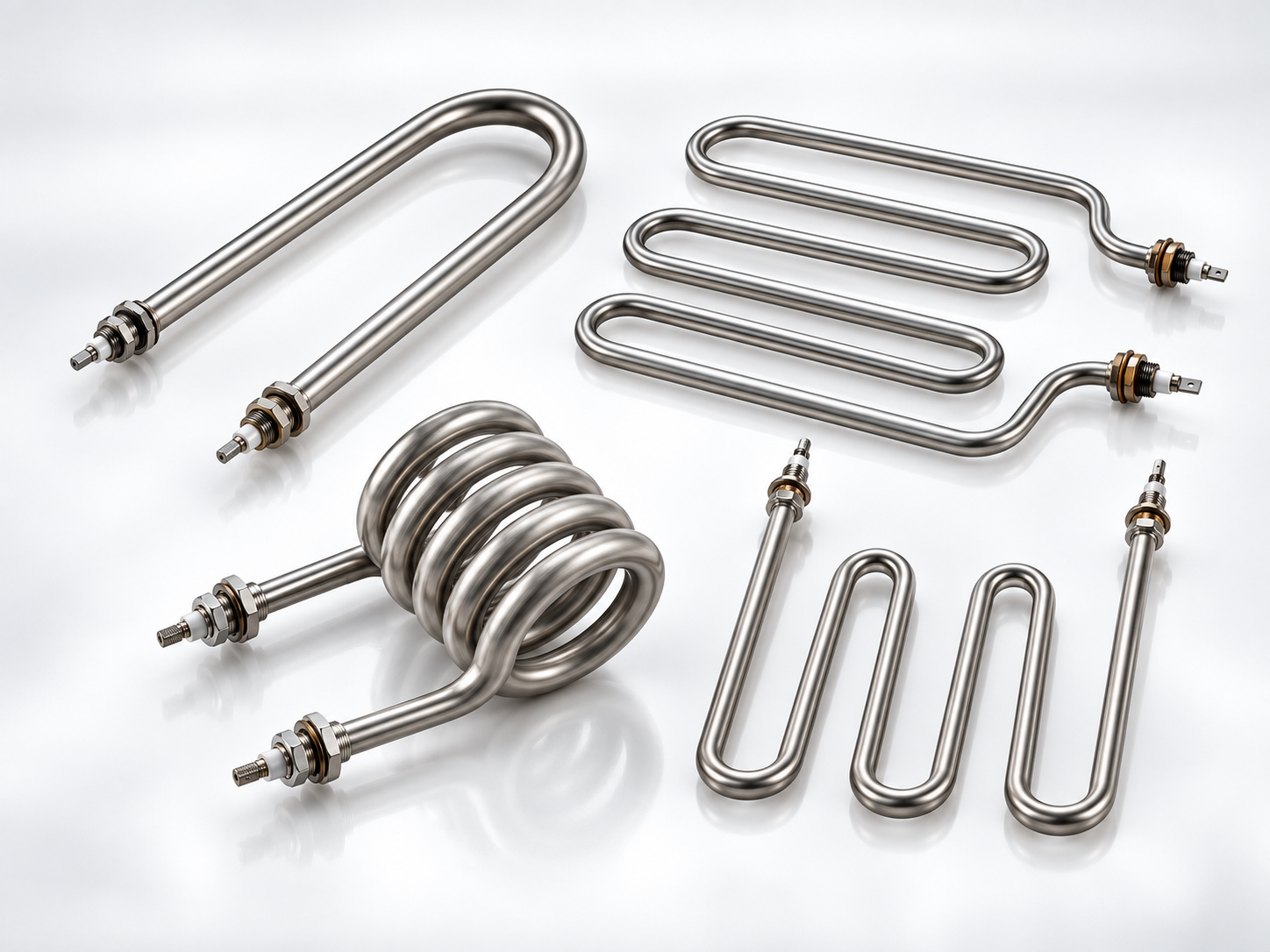
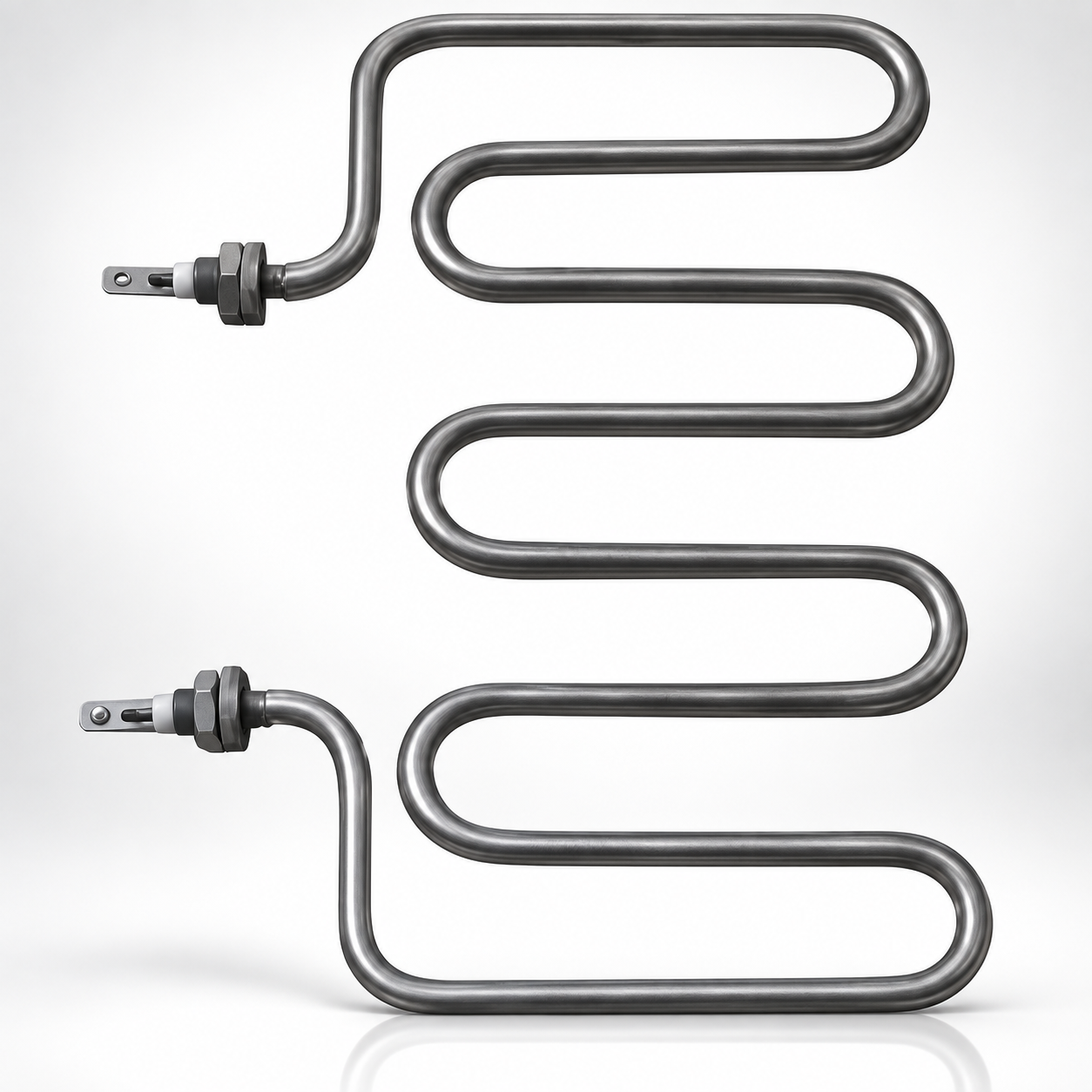
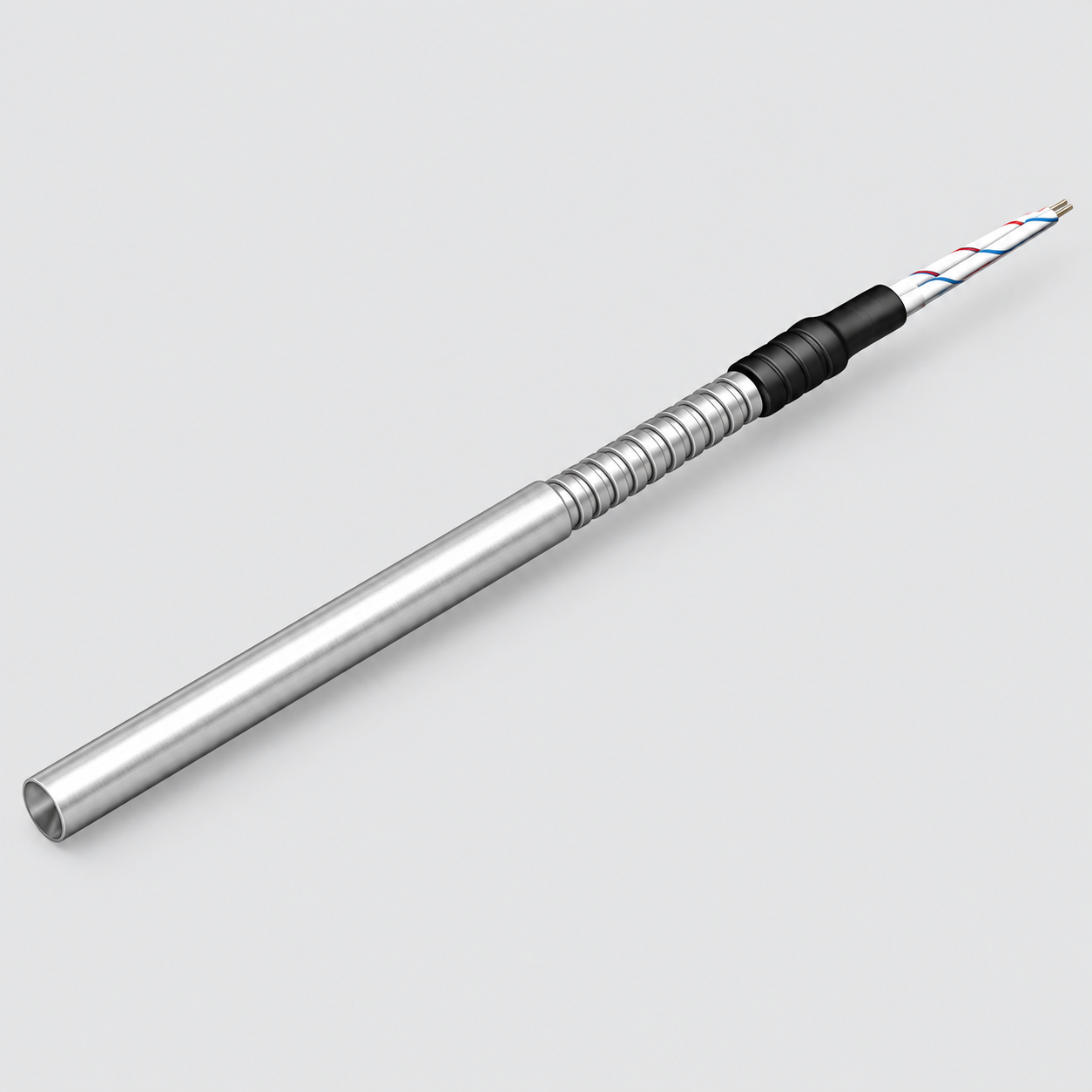
The general purpose element. A mineral insulated tube that can be bent to almost any form and put into air, into liquid or clamped against a surface.
- 6.5 to 16 mmSheath diameter
- 100 to 4000 mmLength range
- 100 to 9000 WWattage range
- 800 °CMax sheath temp
How it is built, and why that matters
A resistance coil runs down the centre of a metal tube, packed in magnesium oxide and compacted so the powder becomes a solid, electrically insulating, thermally conducting core. Cold ends at each terminal keep the seals out of the heat.
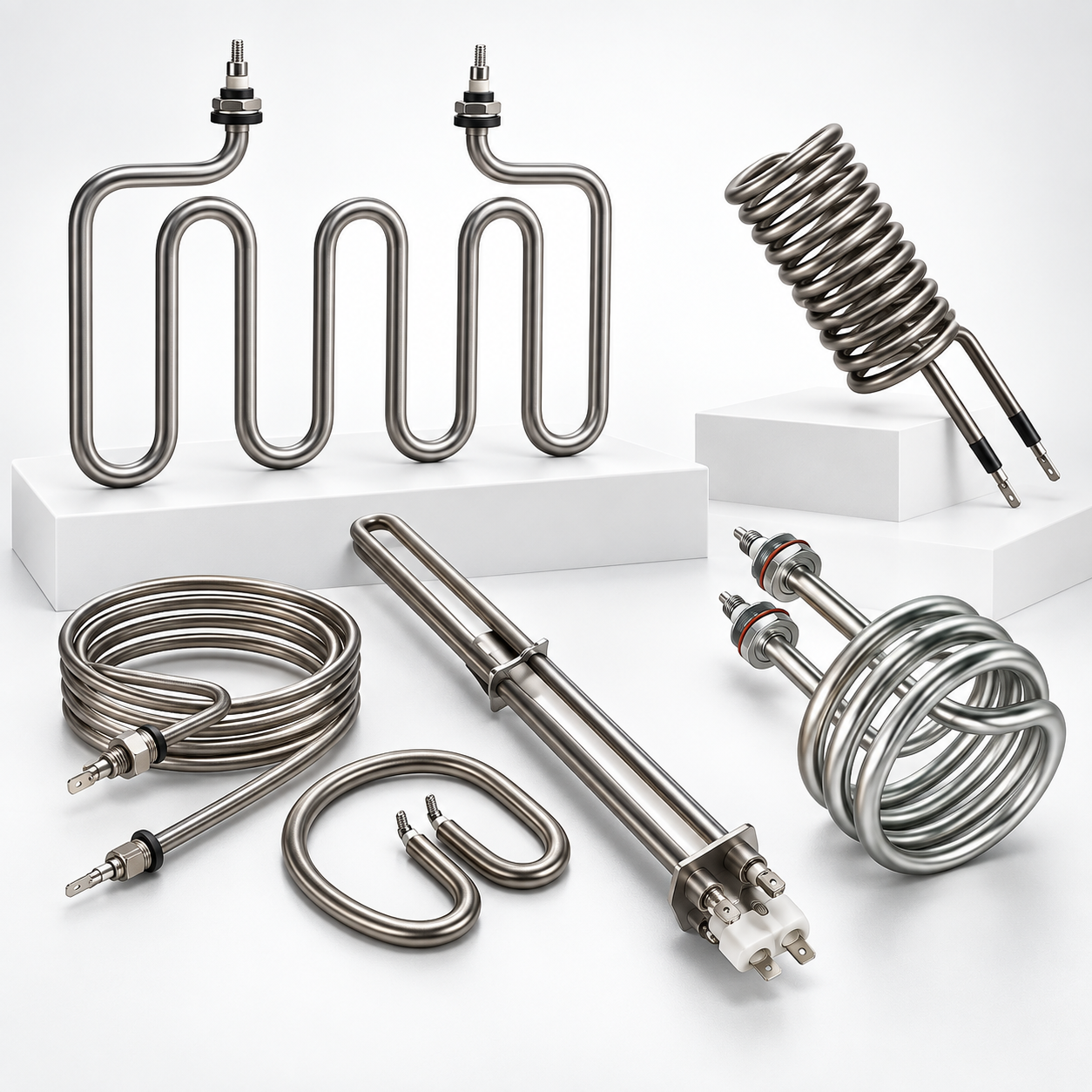
Because the finished tube is a solid rod of insulation, it can be bent. That is what makes the family so general: the same element becomes a duct heater, an immersion heater or a platen heater depending on the form it is bent to.
Sheath material is chosen for what the element sits in, not for what it costs. Stainless for most process work, Incoloy where the temperature or the chemistry would eat stainless.
Where this family sits on temperature
- 0
- 300
- 600
- 900
- 1200 °C
The upper limit is Swiftheat's confirmed rating from the specification table below. The lower end is indicative for this element type.
Technical data
| Property | Stainless steel | Incoloy |
|---|---|---|
| Maximum sheath temperature | 400 °C | 800 °C |
| Maximum watt density in air | 25 to 30 W/sq in | 25 to 30 W/sq in |
| Maximum watt density in liquid | 60 W/sq in | 60 W/sq in |
| Standard voltages | 230, 240, 415 V | 230, 240, 415 V |
| Sheath diameters | 6.5, 8, 8.5, 11, 12.5, 16 mm | 6.5, 8, 8.5, 11, 12.5, 16 mm |
| Length range | 100 to 4000 mm | 100 to 4000 mm |
| Wattage range | 100 to 9000 W | 100 to 9000 W |
| Bend forms | Straight, U, W, coiled | Straight, U, W, coiled |
| Cold end length | As required | As required |
Dimensions
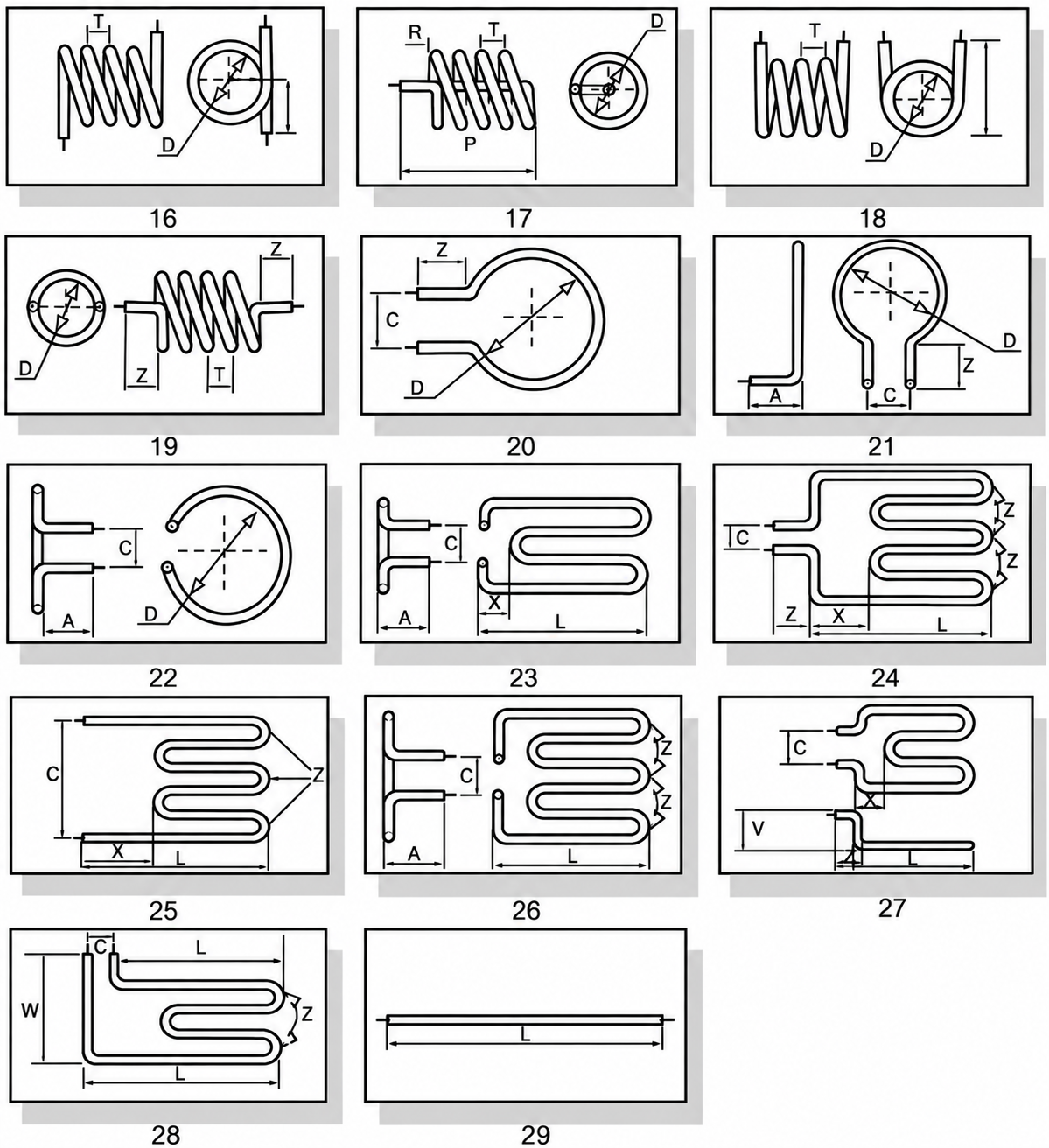
Every dimension we need in order to quote, named the same way on the drawing, in the table and in the enquiry form. A buyer should never have to guess what we call something.
| Dimension | Symbol | Note |
|---|---|---|
| Sheath diameter | D | From the standard list |
| Overall length | L | Developed length if bent |
| Heated length | HL | Excluding cold ends |
| Cold end length | CZ | Each end |
| Bend form | - | Straight, U, W or coiled |
| Bend radius and centres | - | Send a drawing for anything other than a plain U |
Key. D sheath diameter, L overall length, HL heated length, CZ cold end
Options
Everything you can order, given a code, a description and a rating. No Indian heater manufacturer publishes this today. It is what turns a quotation phone call into a part number, and every code here is the code that appears on your requirement document.
Click a photograph to enlarge.
01 Bend form
- B0
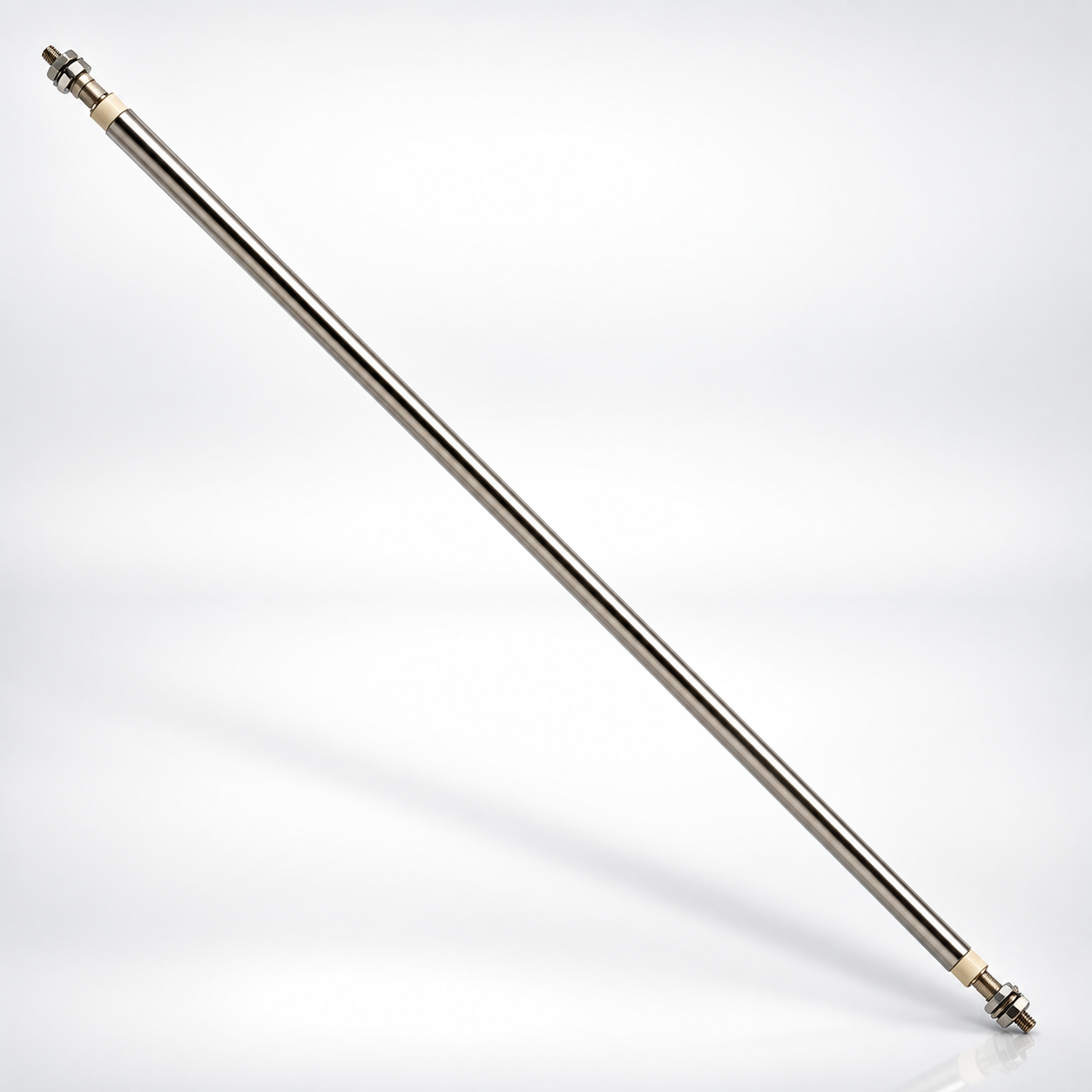
Straight
The plain rod.
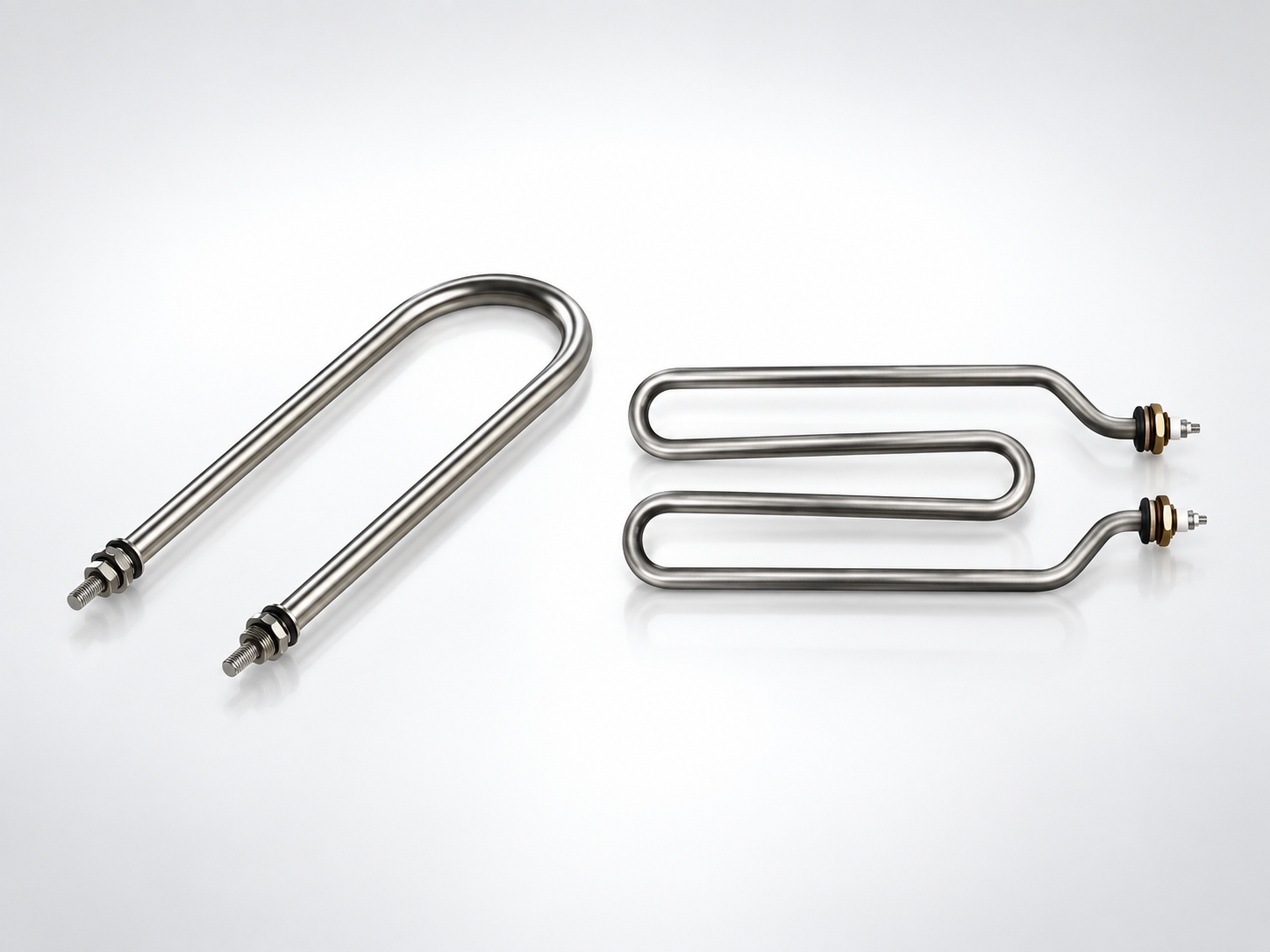
- BU
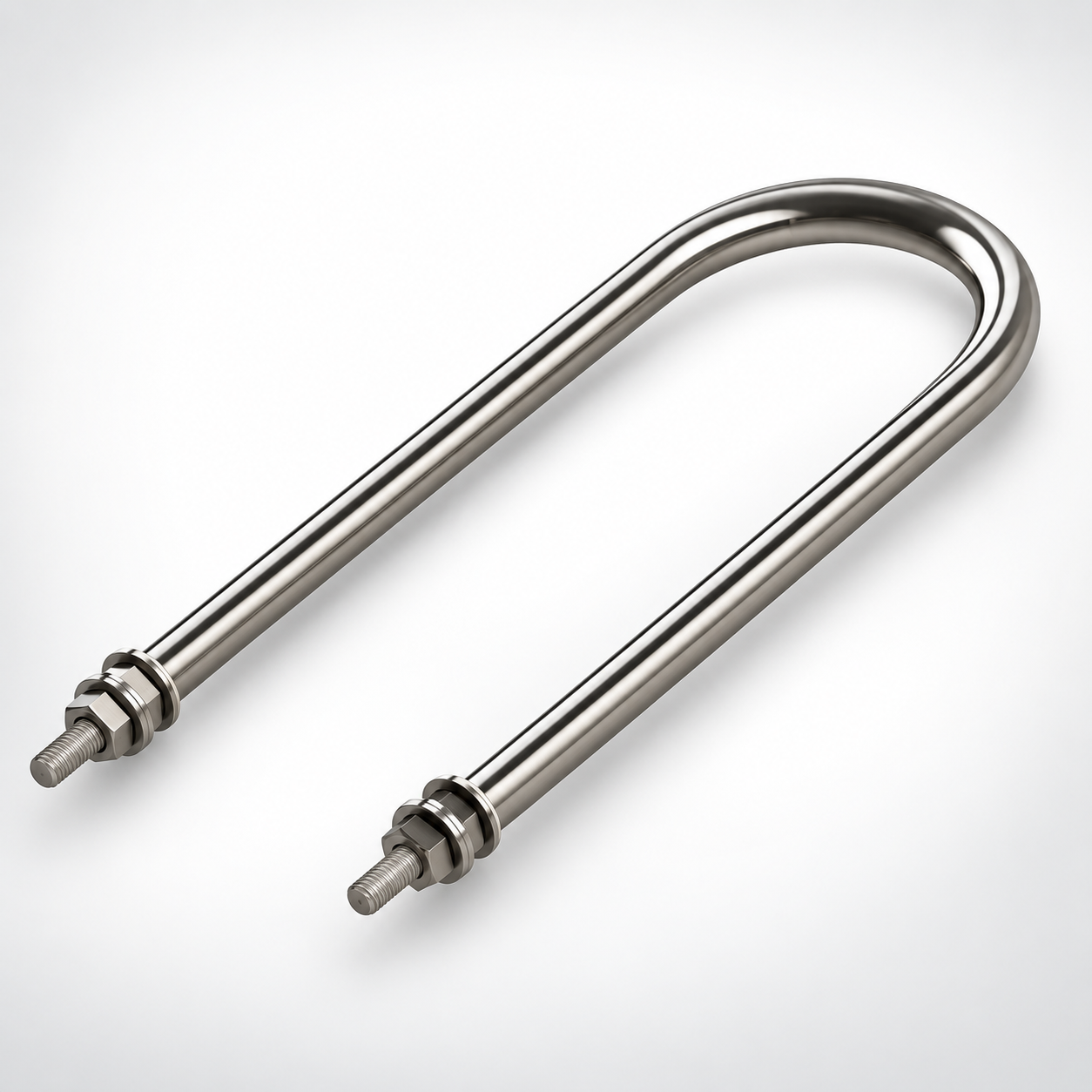
U form
Folded once, both terminals at the same end.
- BW
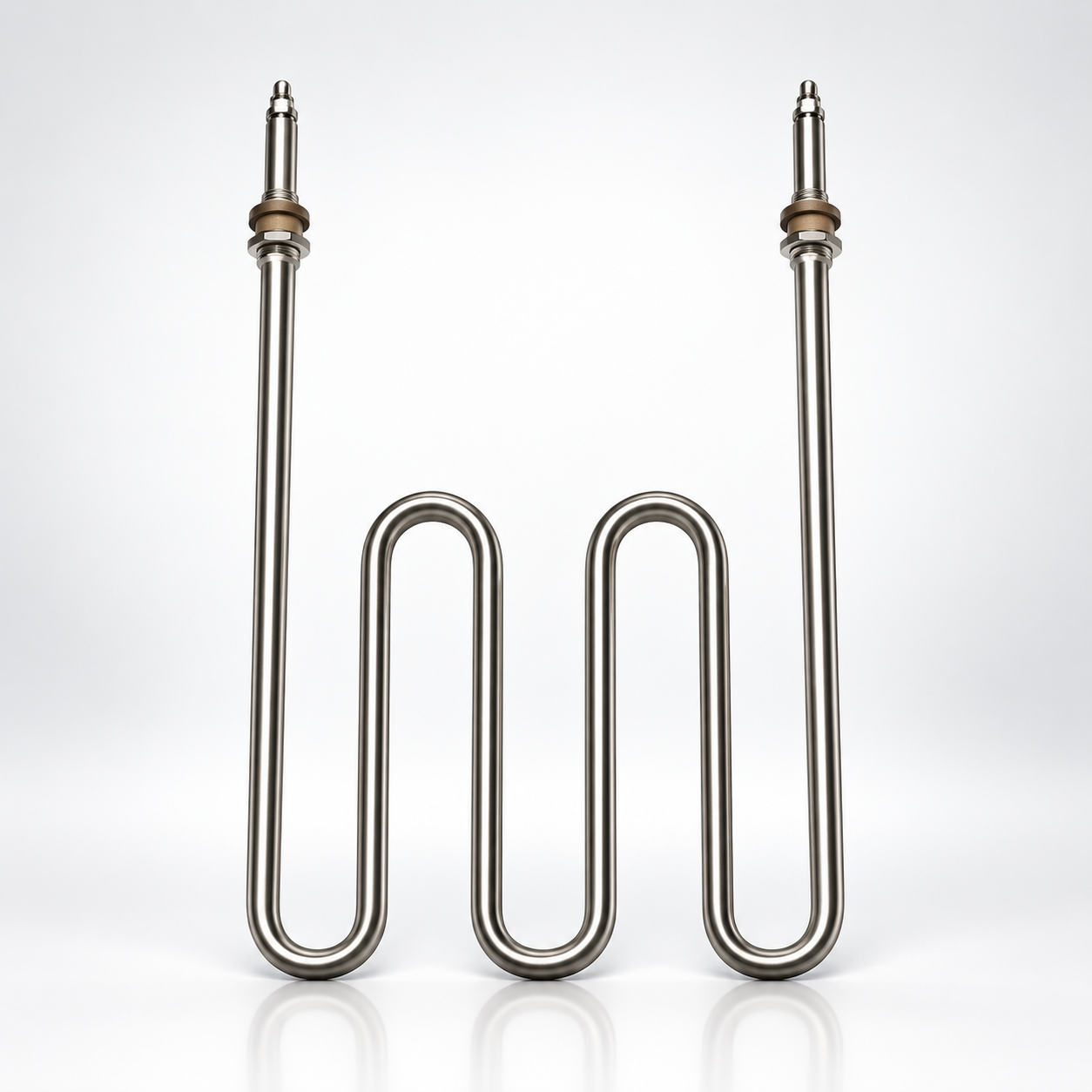
W form
Folded twice, more heated length in the same envelope.
- BC
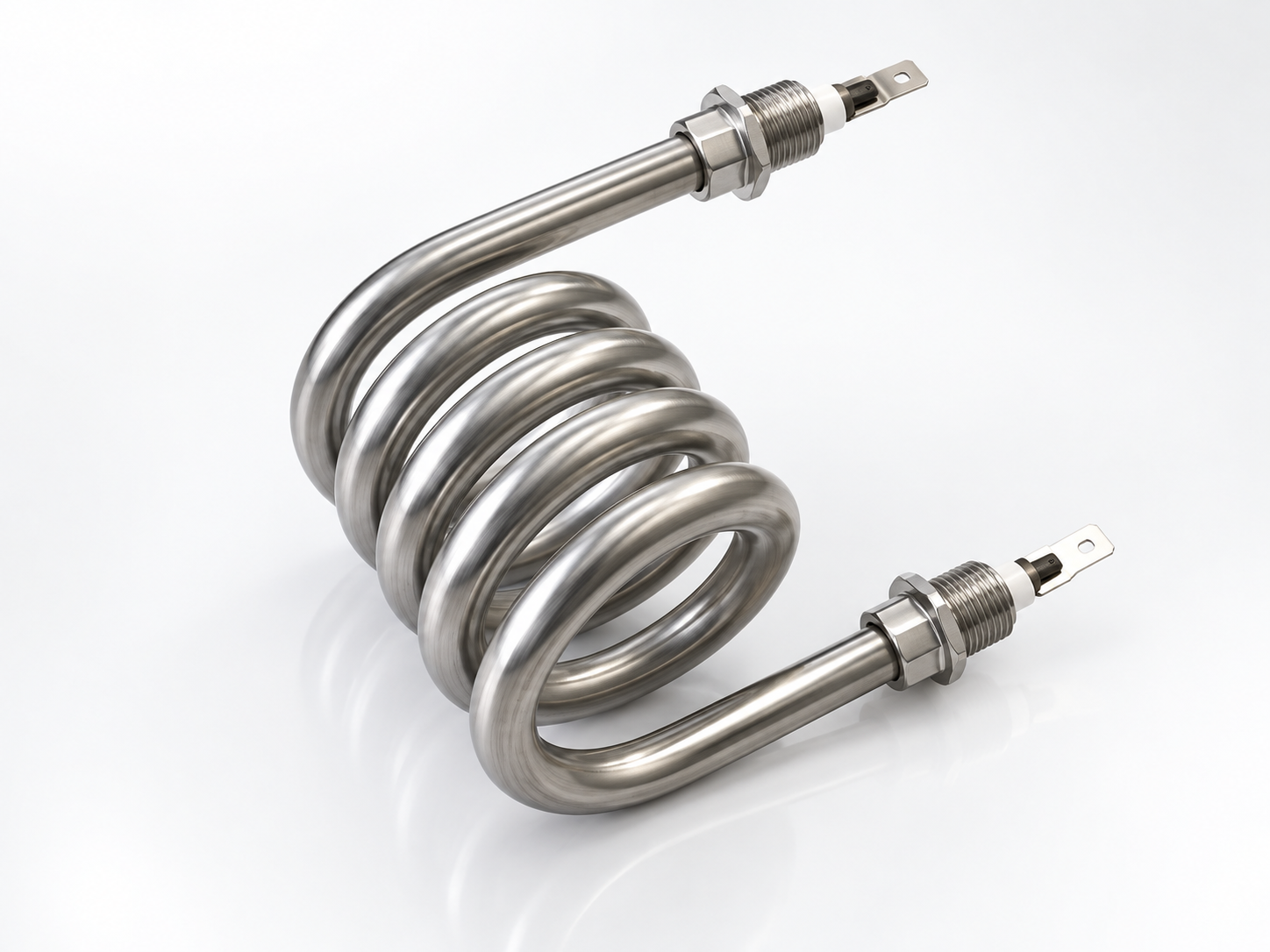
Coiled
Wound to a helix. Send a drawing.
02 Sheath material
- SS
Stainless steel
General process work.
- IN
Incoloy
Higher temperature and more aggressive media.
03 Terminal
- S0
Studs
Threaded studs with nuts, the default.
- S1
Screw terminals
Screw posts.
- S3
Flying leads
Leads with the protection of your choice.
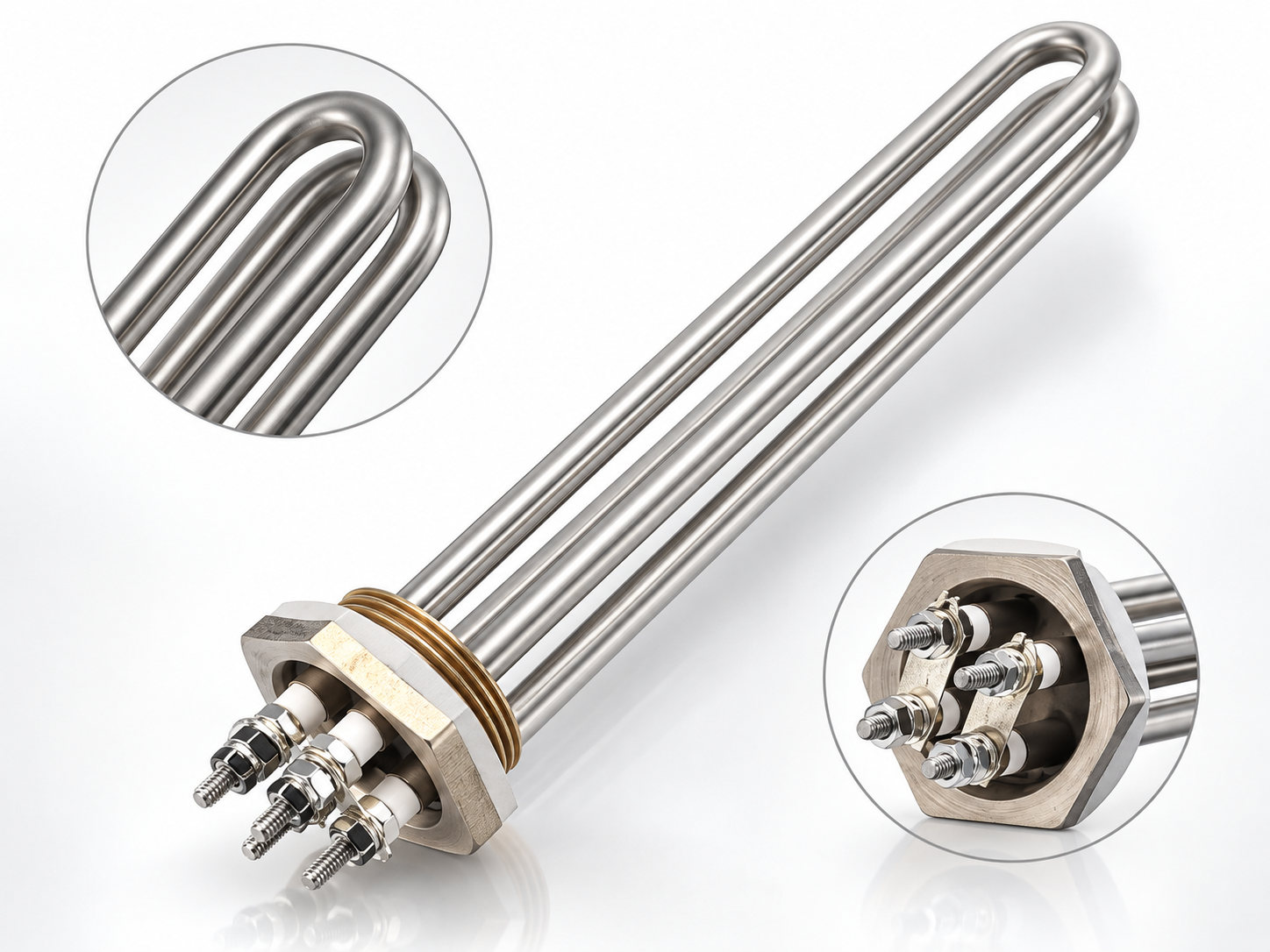
Mounting flanges, threaded bosses and terminal enclosures are quoted from your drawing.
Choosing the right heater
What the element sits in sets the watt density
Still air will carry a fraction of the loading that flowing water will. State the medium and whether it moves.
Never let an immersion element run dry
An element specified for liquid and switched on in air will reach its own limit in seconds. Low level protection is not optional on a tank.
Send a drawing for anything bent
A developed length and a bend form describe a U. Anything else, including coils and multi plane bends, needs a drawing to be quoted correctly the first time.
Why these fail early
Telling a buyer how a product fails is the most credible thing a manufacturer can publish, and it is the fastest way to stop the same failure arriving twice.
- Dry runningThe single most destructive failure mode for an immersion element.
- Scale on the sheathHard water deposits insulate the element and drive the sheath temperature up.
- Wrong sheath for the mediumStainless pitting in chloride, mild steel in water.
- Terminal ingressMoisture entering an unsealed terminal end after a washdown.
- Vibration at the bendAn unsupported long element fatigues at the first bend.
Where these are used
Each one links to the industry page, which shows the heating zones on the machine and the element type for each zone.
- Injection MouldingEvery zone on the machine, from the dryer to the mould, with the element type that suits it.
- ExtrusionBarrel, adapter and die head heating for pipe, profile, sheet and film lines.
- Packaging MachinerySealing bars, cutting and creasing tools, shrink tunnels and hot melt tanks.
- Die and MouldHot stamping dies, press platens and mould preheat, where the heater lives inside the tool.
- Food ProcessingTanks, sealing tools, dryers and jacketed lines, in plant that gets washed down.
- Pharmaceutical MachineryBlister and tube sealing, granulation drying, jacketed vessels and validated temperature measurement.
- Other Industrial HeatingOvens, tanks, ducts, pipes and surfaces, in plant that does not fit any of the categories above.
Request a quote for tubular heaters
Fill in what you know and leave the rest. The whole specification arrives at the works as a single readable email, and anything you leave blank our engineers will propose.