 Thermal Technologies
Product family
Ceramic and Mica Band and Nozzle Heaters
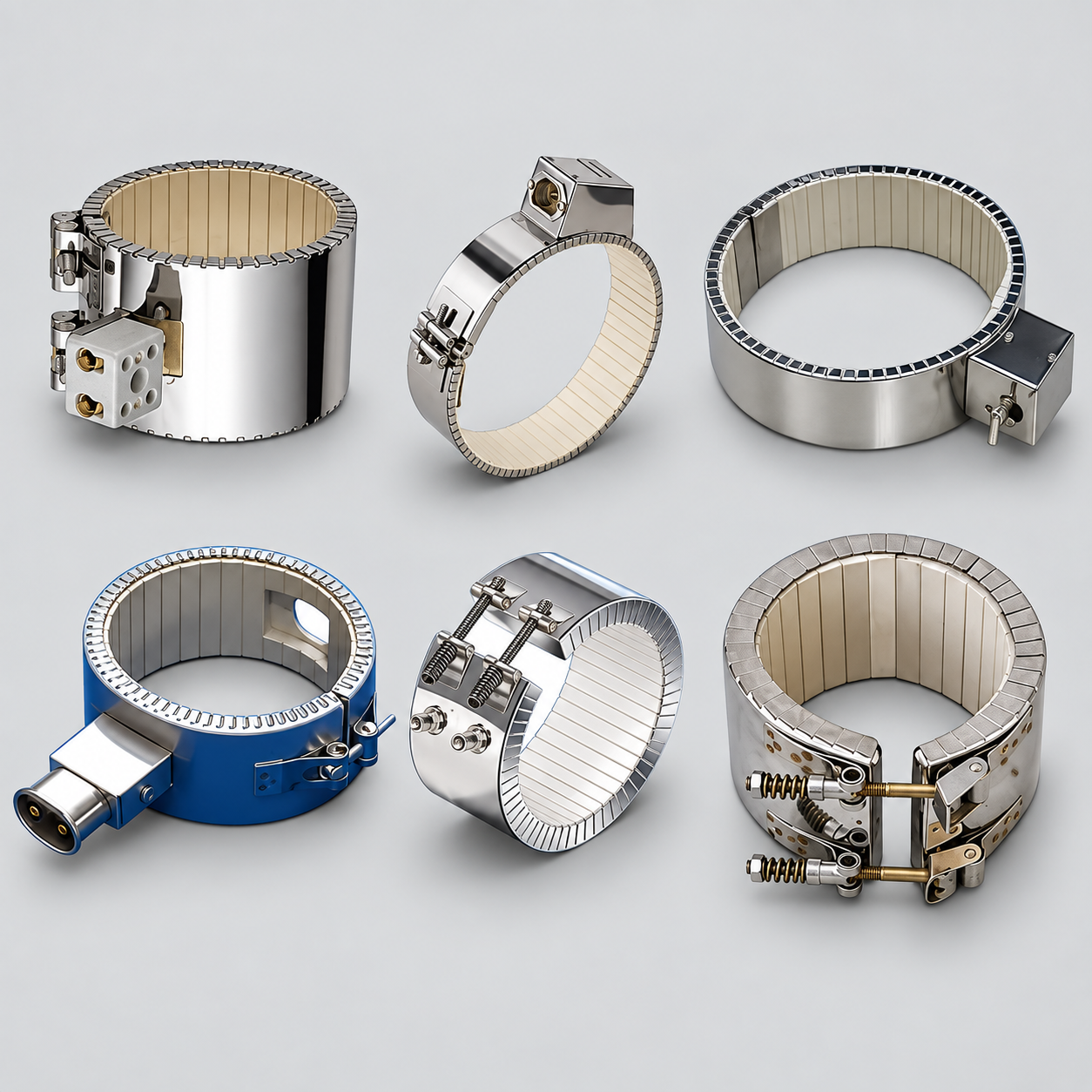
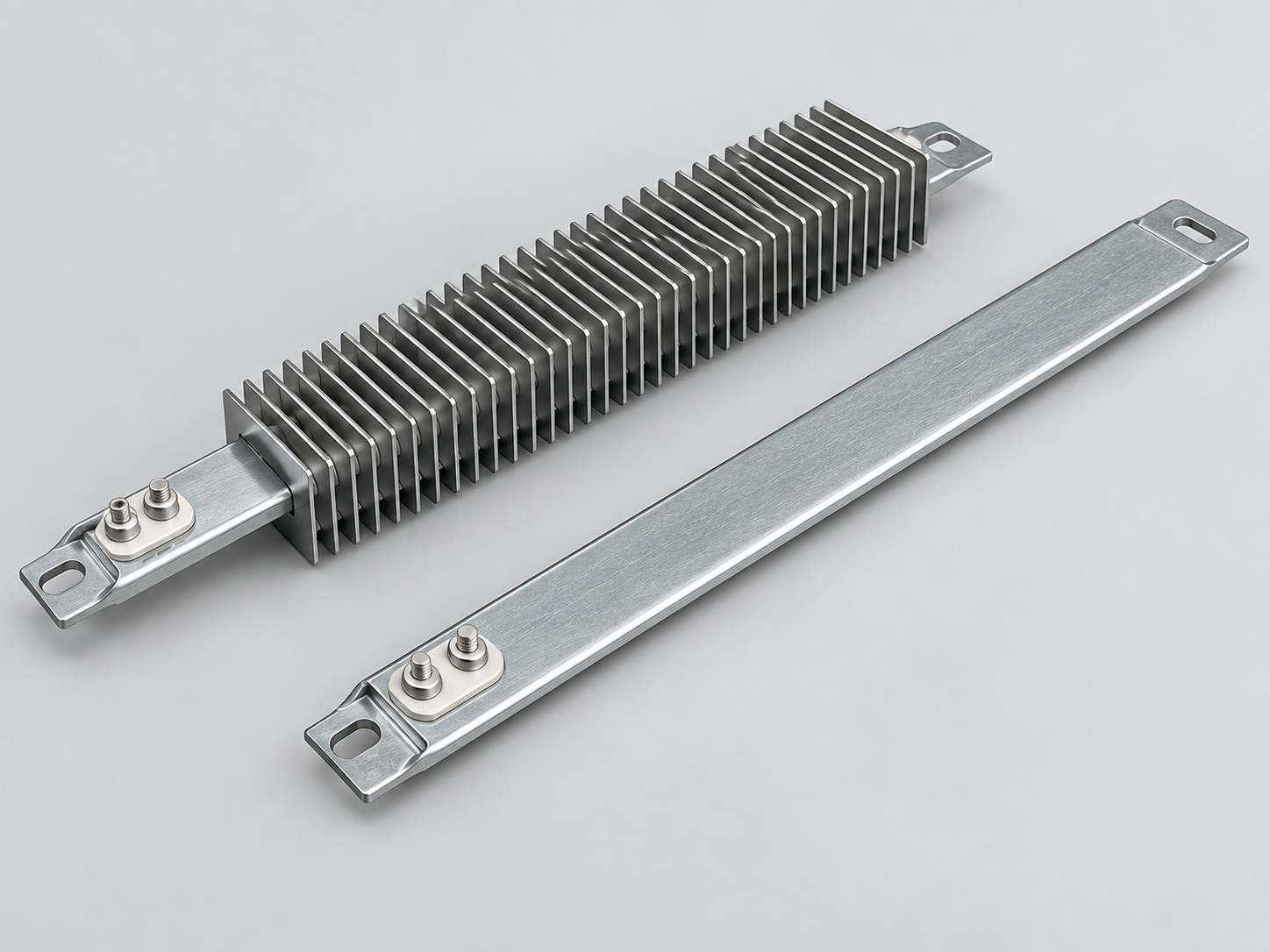
Clamped around barrels, cylinders and injection nozzles. Ceramic for the higher temperatures and insulated running, mica where the section has to stay thin.
- 20 to 800 mmInside diameter
- 20 to 400 mmWidth
- 100 to 9000 WWattage range
- 500 °CMax working temp
How it is built, and why that matters
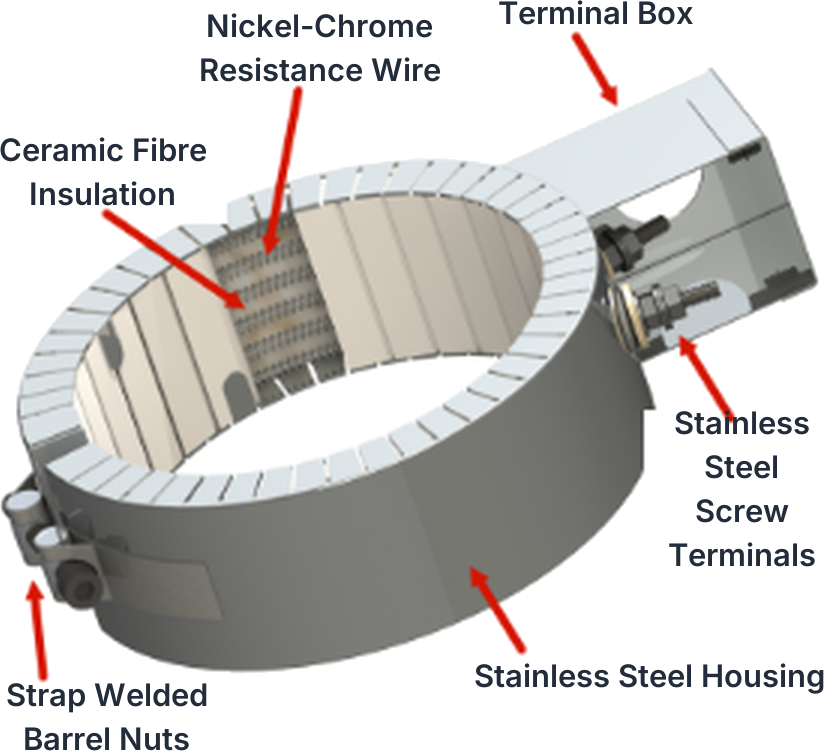
A ceramic band carries the resistance wire threaded through interlocking ceramic tiles, held in a stainless steel outer with a ceramic fibre insulation blanket behind it. The wire never touches the barrel, so it can run hotter, and the insulation sends the heat inward instead of into the workshop.
A mica band carries flat resistance ribbon wound over a mica sheet, sandwiched between more mica and a thin steel outer. It is thinner, cheaper and faster to make, and it suits lower temperatures and tighter clearances.
Whichever it is, the heater only works if it clamps down onto the barrel. A band that has been opened and refitted a dozen times, or fitted to a barrel that has worn oval, is heating an air gap.
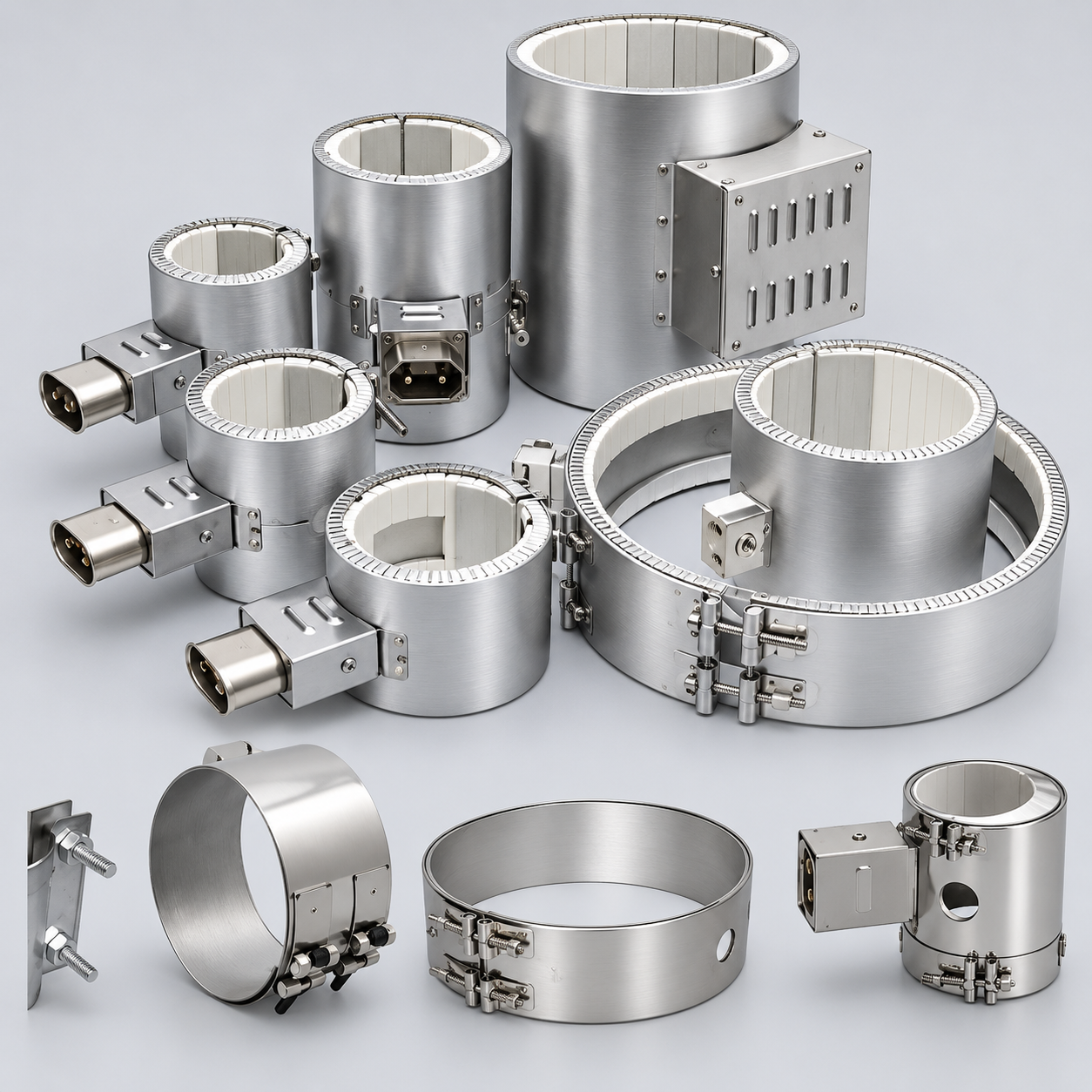
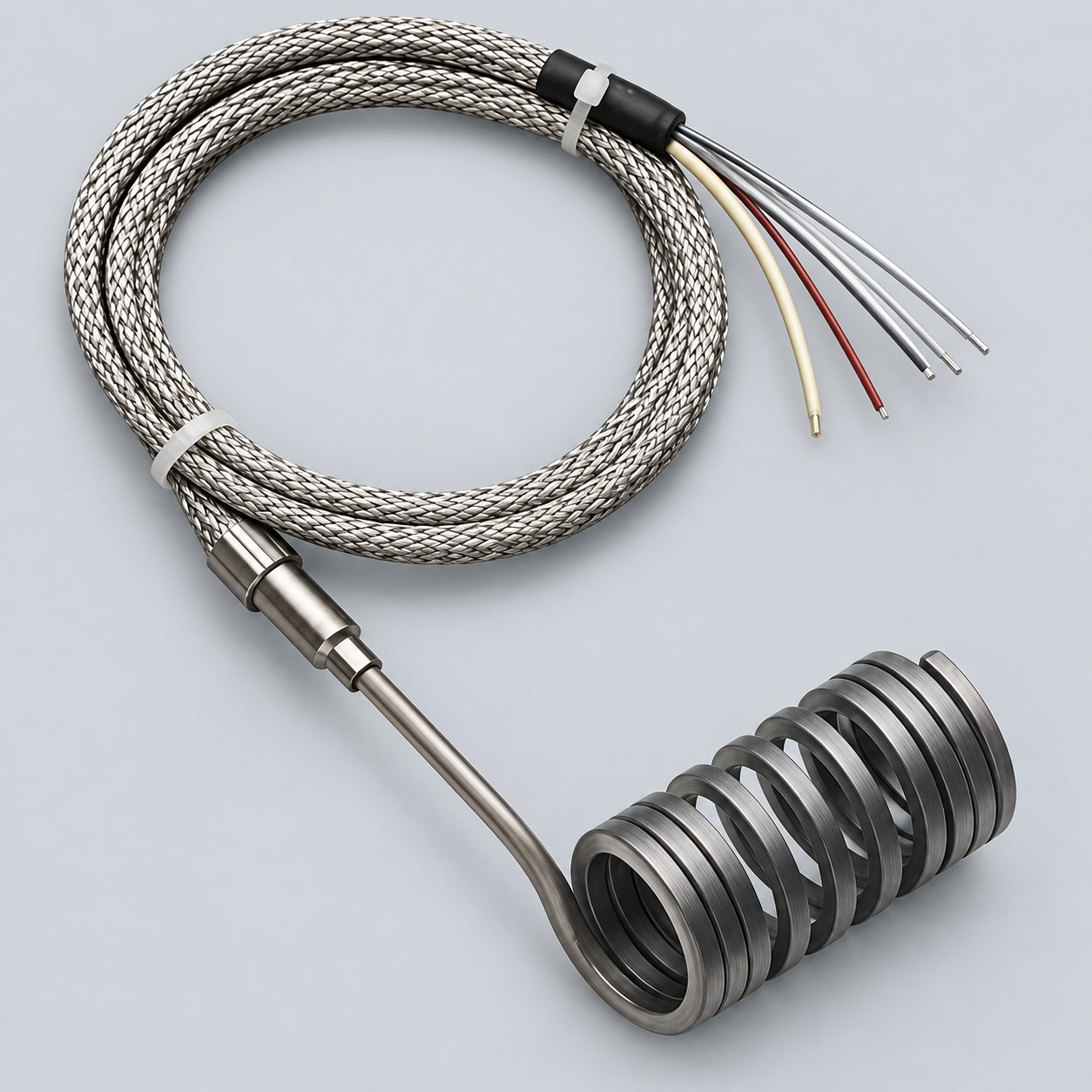
A nozzle heater is the same construction at nozzle proportions: short, small in diameter and usually clamped rather than strapped. Wall thickness on the platen bore decides whether ceramic will fit at all, and most nozzle heaters carry the thermocouple because the controller is holding the melt at the gate.
Where this family sits on temperature
- 0
- 300
- 600
- 900
- 1200 °C
The upper limit is Swiftheat's confirmed rating from the specification table below. The lower end is indicative for this element type.
Technical data
| Property | Ceramic | Mica |
|---|---|---|
| Maximum working temperature | 500 °C | 250 °C |
| Maximum watt density | 50 W/sq in | 20 W/sq in |
| Standard voltages | 230, 240, 415 V | 230, 240, 415 V |
| Inside diameter range | 20 to 800 mm | 20 to 800 mm |
| Width range | 20 to 400 mm | 20 to 400 mm |
| Wattage range | 100 to 9000 W | 100 to 9000 W |
| Section thickness | Not required | Not required |
| Cutouts and holes | Yes, to your drawing | Yes, to your drawing |
| Insulation blanket | Optional | Not applicable |
| Nozzle outside diameter | 10 to 150 mm | 10 to 150 mm |
| Nozzle heated length | 20 to 400 mm | 20 to 400 mm |
| Inbuilt thermocouple on a nozzle | J or K | J or K |
Dimensions
Every dimension we need in order to quote, named the same way on the drawing, in the table and in the enquiry form. A buyer should never have to guess what we call something.
| Dimension | Symbol | Note |
|---|---|---|
| Inside diameter | ID | Measured on the barrel, not the drawing nominal |
| Width | W | Across the band |
| Gap at the joint | G | State if a specific gap is required |
| Angle of coverage | A | Partial coverage only |
| Cutout positions | - | Position and size, from a stated datum |
| Termination position | - | Clock position on the circumference |
| Nozzle outside diameter | OD | Measured at the seat of the heater |
| Nozzle heated length | HL | Along the nozzle |
| Maximum wall thickness available | T | The bore the nozzle passes through |
Key. ID inside diameter, W width, G joint gap, A angle of coverage, OD nozzle diameter, HL nozzle heated length, T wall thickness
Options
Everything you can order, given a code, a description and a rating. No Indian heater manufacturer publishes this today. It is what turns a quotation phone call into a part number, and every code here is the code that appears on your requirement document.
01 Material
- CE
Ceramic
Higher temperature, insulated, heat directed inward.
- MI
Mica
Thinner section, lower temperature, lower cost.
02 Construction
- C1
One piece
Full circle, slides on from the end of the barrel.
- C2
Two piece
Split into halves, fits a barrel that cannot be cleared.
- CE1
Expandable
Opens to slide over the barrel, then closes down onto it.
- CP
Partial coverage
Part of the circumference. State the angle.
03 Clamping
- K1
Built in strap
Integral barrel strap, the usual choice.
- K2
Separate strap
Removable clamping band.
- K3
Wedge lock
For heaters that come off frequently.
- K4
Spring loaded
Holds pressure as the barrel expands and contracts.
04 Termination
- S1
Screw terminals
Exposed screw posts.
- S2
Post terminals
Ceramic insulated posts.
- S3
Flying leads
Leads with the protection of your choice.
- S4
Terminal box
Enclosed box, for washdown or dusty plant.
05 Inbuilt thermocouple, nozzle heaters
- TC0
None
Control from a separate sensor.
- TCJ
Type J
Iron constantan.
- TCK
Type K
Higher range than Type J.
Cutouts, thermocouple holes and slots are made to your drawing. Send the drawing with the enquiry and state the datum you are measuring from. For a nozzle heater, state the clock position of the terminal so it clears the platen.
Choosing the right heater
Measure the barrel, not the drawing
Barrels wear. An inside diameter taken from the machine's original drawing can be a millimetre or more away from the surface the band actually has to grip.
Watt density follows the process temperature
The higher the barrel runs, the lower the watt density the element can carry without the wire reaching its own limit. Tell us the zone temperature and we will work back to a safe loading.
Insulate the ones that pay for it
An insulation blanket on a barrel band cuts the heat lost into the shop and shortens heat up time. It is worth it on continuous running machines and rarely worth it on short duty ones.
Clearance decides the material on a nozzle
Measure the bore the nozzle passes through before choosing ceramic. If the available wall is thin, mica is not a compromise, it is the only option that fits.
Why these fail early
Telling a buyer how a product fails is the most credible thing a manufacturer can publish, and it is the fastest way to stop the same failure arriving twice.
- Not clamped downThe commonest failure. Air between band and barrel traps heat in the element.
- Refitted too many timesRepeated opening and closing work hardens the outer and it stops closing tight.
- Contamination at the jointPurged plastic finds the gap, carbonises and insulates.
- Terminal damageScrew terminals loosened by vibration arc and burn the connection.
- Wrong construction for the fitA one piece band fitted where the barrel could not be cleared, forced open on assembly.
- Clamped onto a worn nozzleThe heater no longer grips and heats an air gap.
- Terminal fouling on a nozzleThe terminal position was never stated, so it hits the platen on assembly.
Where these are used
Each one links to the industry page, which shows the heating zones on the machine and the element type for each zone.
- Injection MouldingEvery zone on the machine, from the dryer to the mould, with the element type that suits it.
- ExtrusionBarrel, adapter and die head heating for pipe, profile, sheet and film lines.
- Blow MouldingPreform reheat, extrusion head and neck tooling heating for PET and extrusion blow lines.
- Packaging MachinerySealing bars, cutting and creasing tools, shrink tunnels and hot melt tanks.
- Rubber and ElastomersCuring and vulcanising platens, extruder barrels and mould heating.
Request a quote for ceramic and mica band and nozzle heaters
Fill in what you know and leave the rest. The whole specification arrives at the works as a single readable email, and anything you leave blank our engineers will propose.