 Thermal Technologies
Product family
Cartridge Heaters
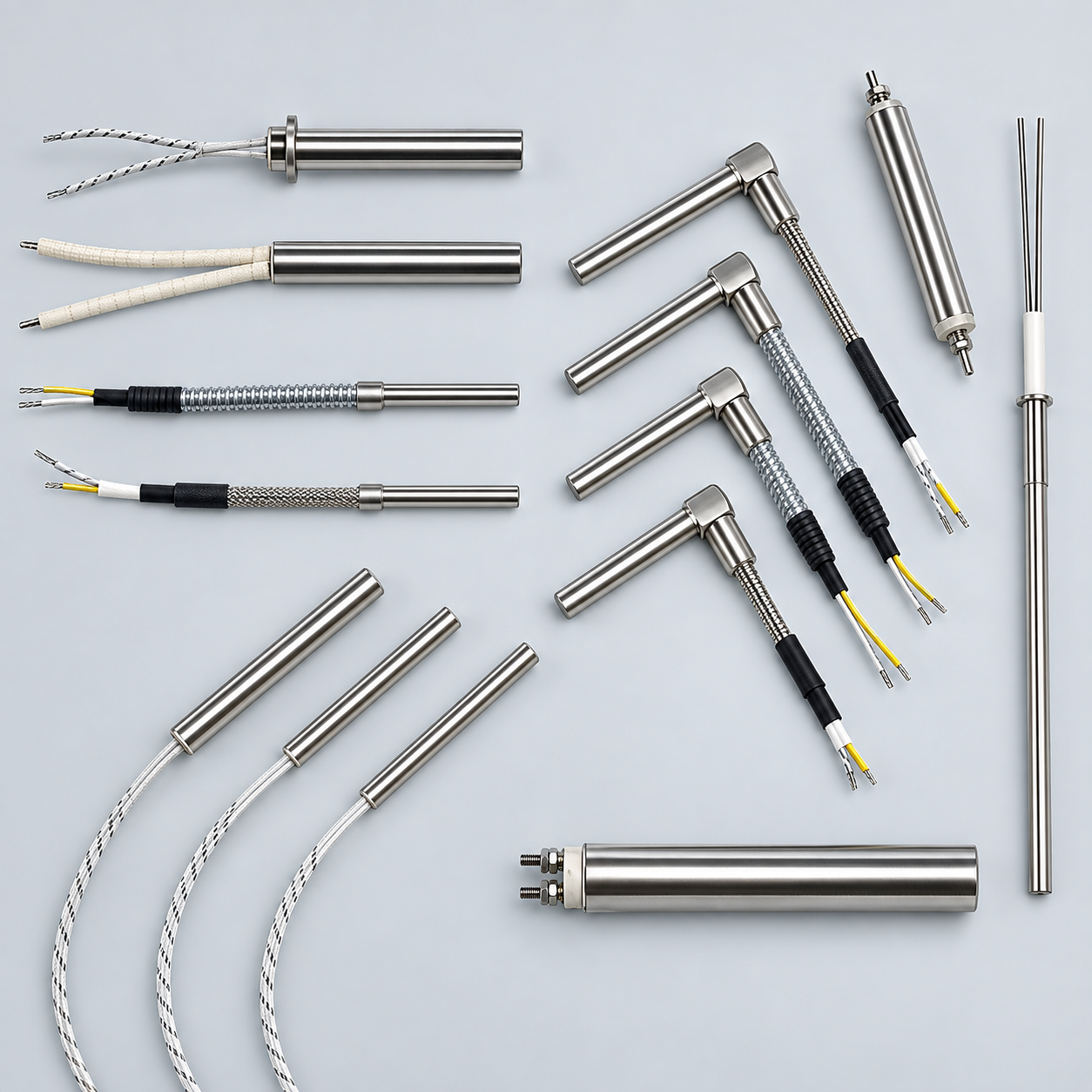
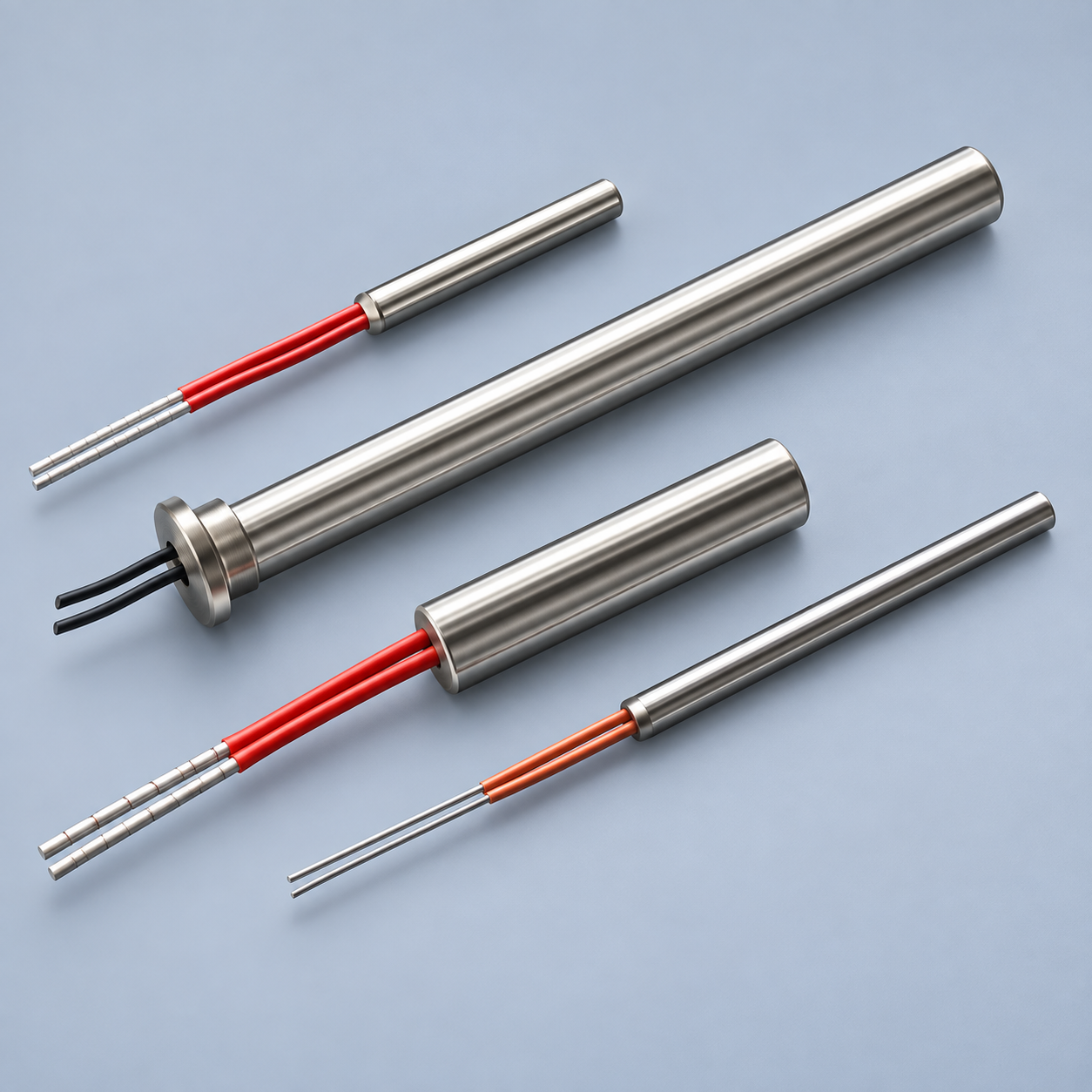
Swaged, high watt density heaters for bore mounting in moulds, platens and dies. Built to your drawing, with or without an inbuilt thermocouple.
- 6.35 to 25.4 mmDiameter range
- 35 to 1500 mmLength range
- 800 °CMax sheath temp
- 120 W/sq inMax watt density
How it is built, and why that matters
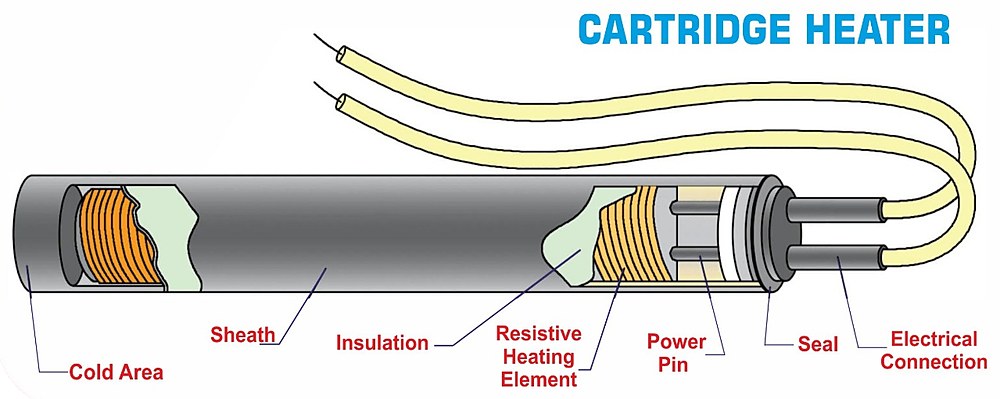
A resistance coil is wound over a ceramic core and centred inside a metal sheath. The void is packed with magnesium oxide, then the whole assembly is compacted by swaging, which crushes the MgO into a dense, void free mass.
That compaction is the entire point. Dense MgO conducts heat outward to the sheath far better than loose powder, so the coil runs cooler for the same output. A heater that transfers its heat quickly into your tool is a heater that does not cook itself. Poorly compacted elements fail early and always fail the same way.
The heated section stops short of each end, leaving unheated cold zones so the terminations stay below the temperature that would damage the leads or the seal.
Where this family sits on temperature
- 0
- 300
- 600
- 900
- 1200 °C
The upper limit is Swiftheat's confirmed rating from the specification table below. The lower end is indicative for this element type.
Technical data
| Property | Stainless steel | Incoloy 800 |
|---|---|---|
| Maximum sheath temperature | 400 °C | 800 °C |
| Maximum watt density | 60 to 120 W/sq in | 60 to 120 W/sq in |
| Watt density classes made | High and medium | High and medium |
| Standard voltages | 110, 230, 240, 415 V | 110, 230, 240, 415 V |
| Diameter range | 6.35 to 25.4 mm | 6.35 to 25.4 mm |
| Length range | 35 to 1500 mm | 35 to 1500 mm |
| Wattage range | 20 to 6000 W | 20 to 6000 W |
| Diameter tolerance | -0.02 to -0.06 mm | -0.02 to -0.06 mm |
| Wattage tolerance | ± 10% | ± 10% |
| Resistance tolerance | ± 10% | ± 10% |
| Lead temperature rating | By lead type, see options | By lead type, see options |
Dimensions
Every dimension we need in order to quote, named the same way on the drawing, in the table and in the enquiry form. A buyer should never have to guess what we call something.
| Diameter D | Inch | Min L | Max L |
|---|---|---|---|
| 6.35 mm | 1/4 | 40 mm | 800 mm |
| 8 mm | 5/16 | 40 mm | 800 mm |
| 9.5 mm | 3/8 | 40 mm | 800 mm |
| 10 mm | - | 40 mm | 800 mm |
| 12.7 mm | 1/2 | 40 mm | 1000 mm |
| 16 mm | 5/8 | 40 mm | 1500 mm |
| 19.05 mm | 3/4 | 50 mm | 1500 mm |
| 25.4 mm | 1 | 50 mm | 1000 mm |
Key. L overall length, HL heated length, CZ cold zone, D diameter, LL lead length
Options
Everything you can order, given a code, a description and a rating. No Indian heater manufacturer publishes this today. It is what turns a quotation phone call into a part number, and every code here is the code that appears on your requirement document.
Click a photograph to enlarge.
01 Termination
- T1
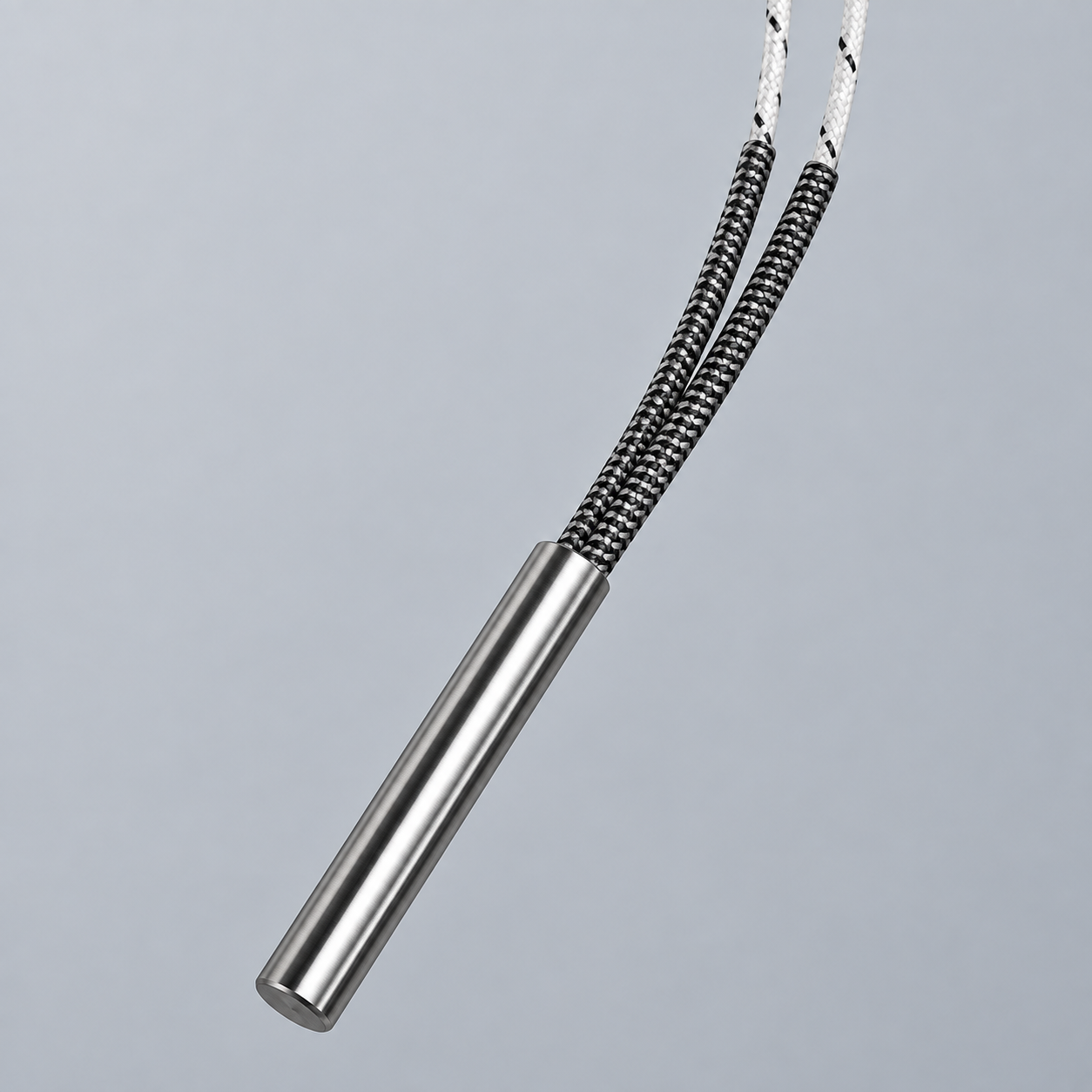
Single end, straight
Leads exit axially from one end. The default.
- T2
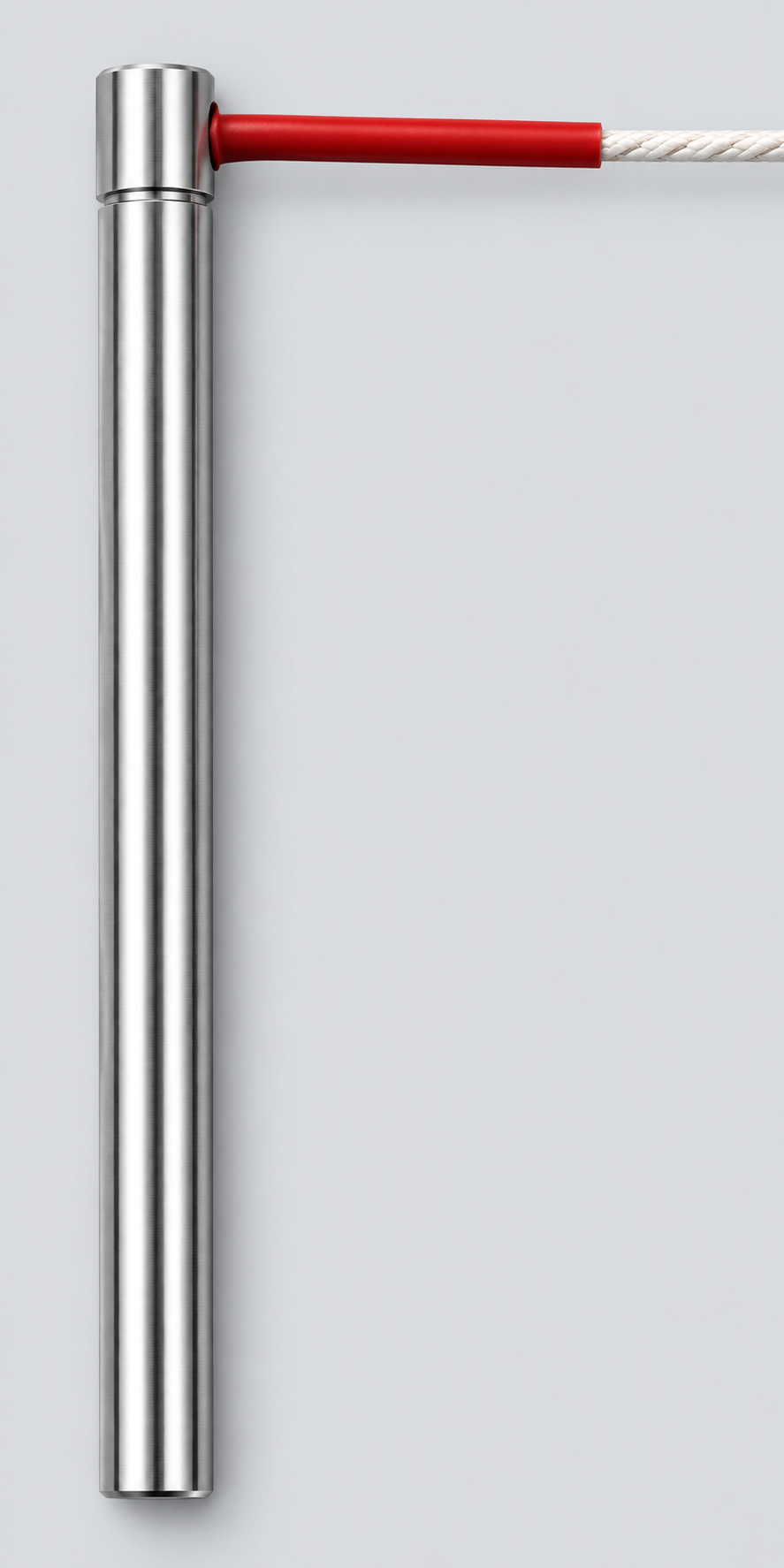
Single end, right angle
For tight clearance above the tool face.
- T3
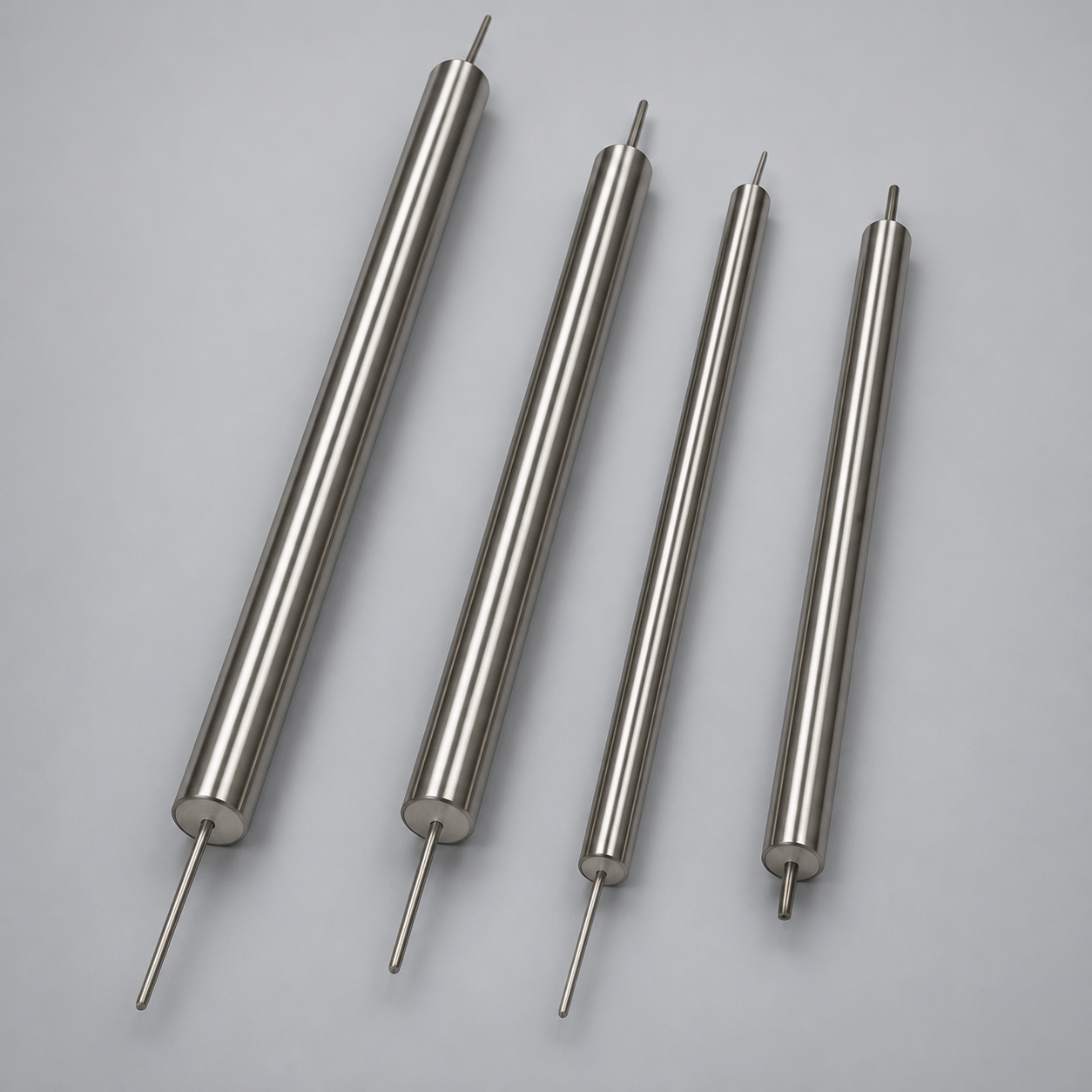
Double ended
One lead from each end, for through holes.
02 Lead protection
- L1
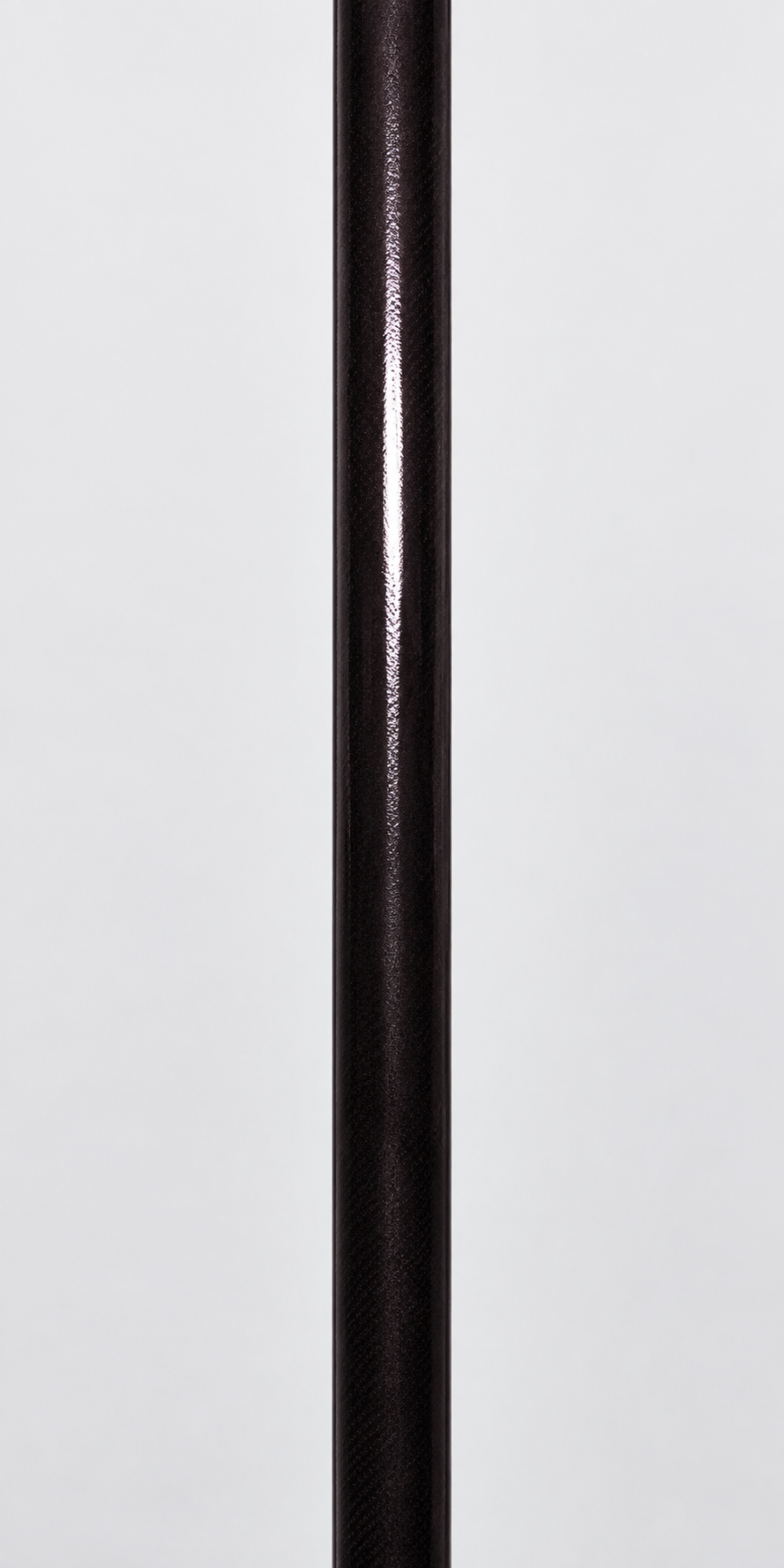
Silicone coated fibreglass
General purpose, dry and clean environments.
- L3
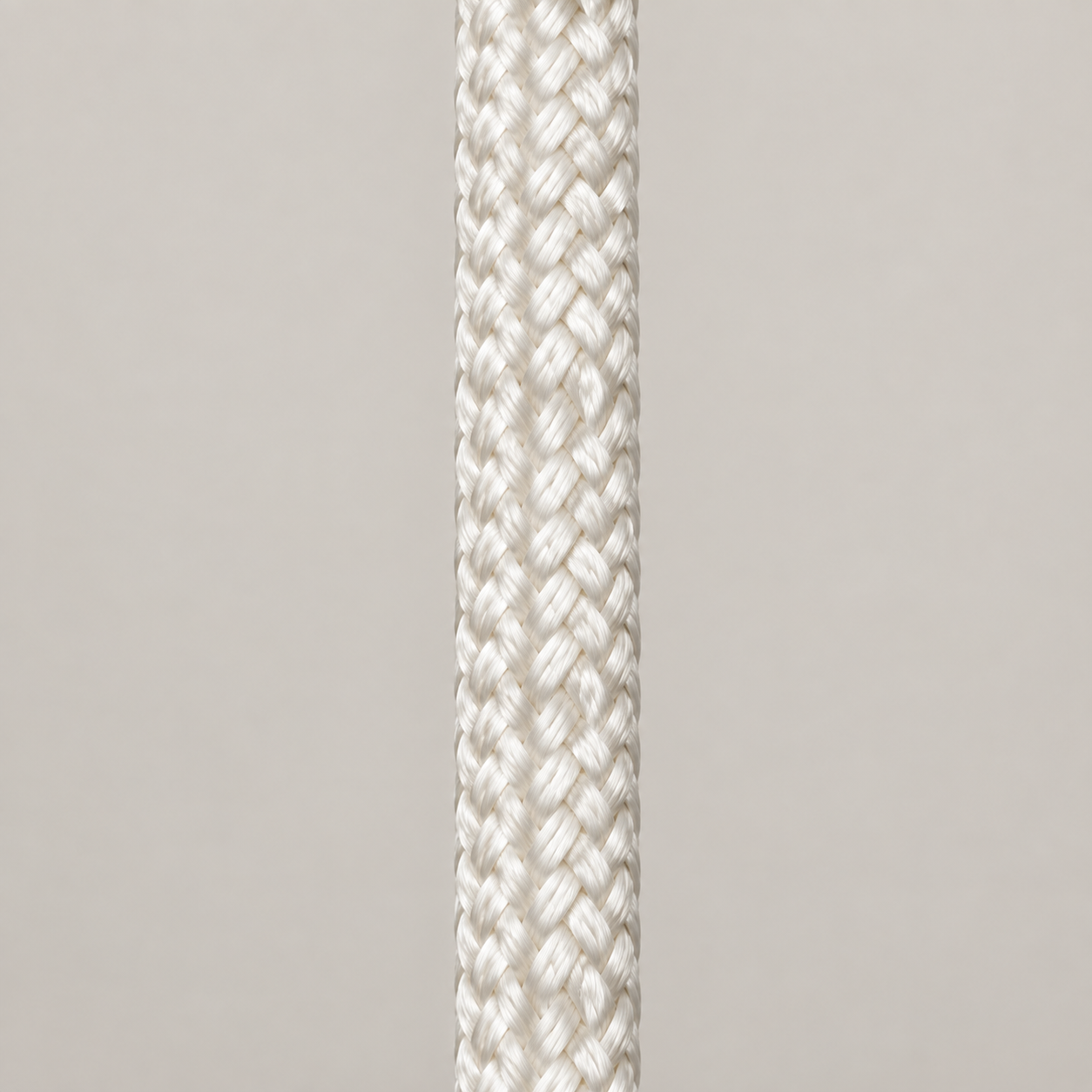
Braided metal sleeve
Abrasion resistance where leads move or rub.
- L4
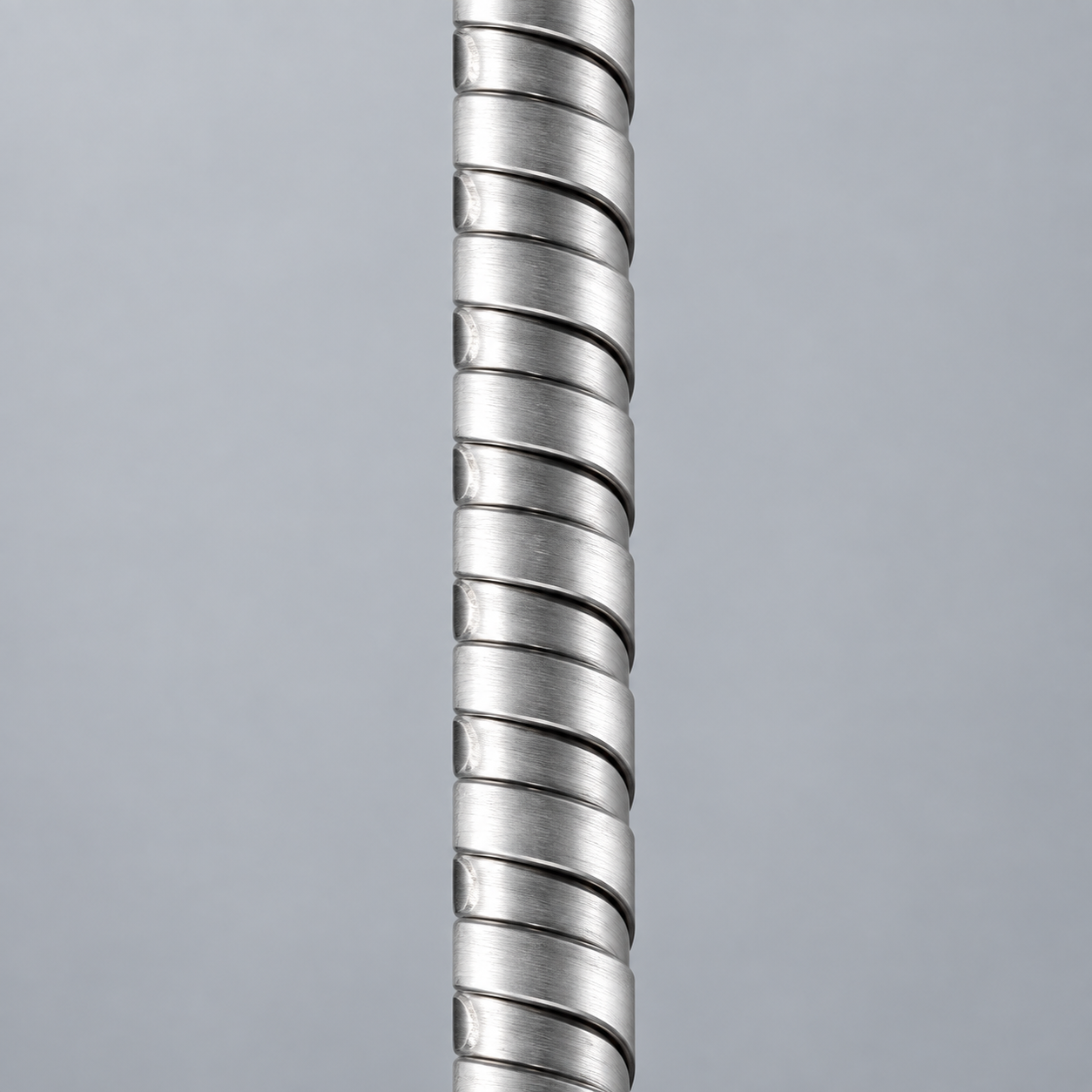
Armour cable
Full mechanical protection on a moving platen.
- L5
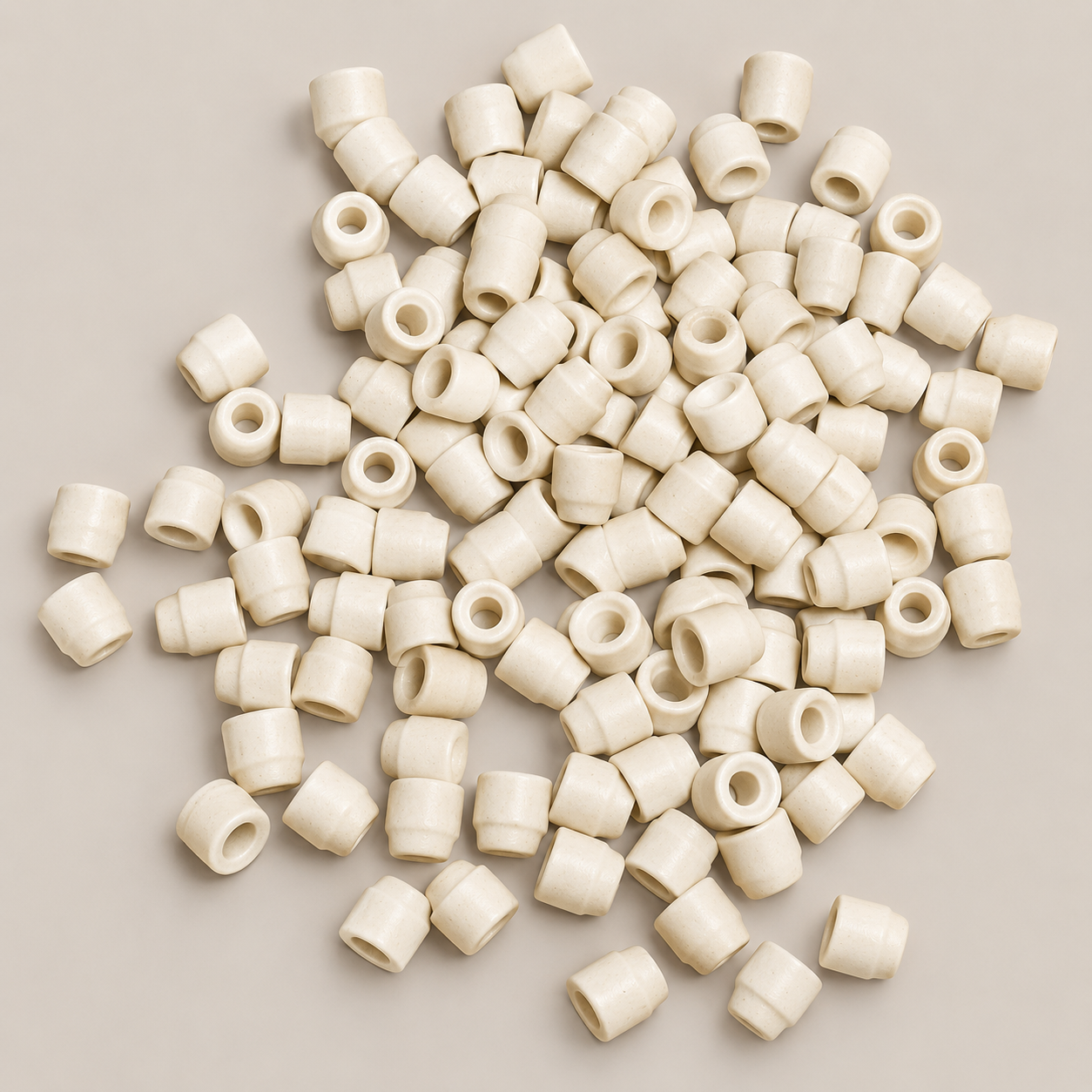
Ceramic beading
Highest lead exit temperature, no organic insulation.
03 Inbuilt thermocouple
- TC0
None
Control from a separate sensor.
- TCJ
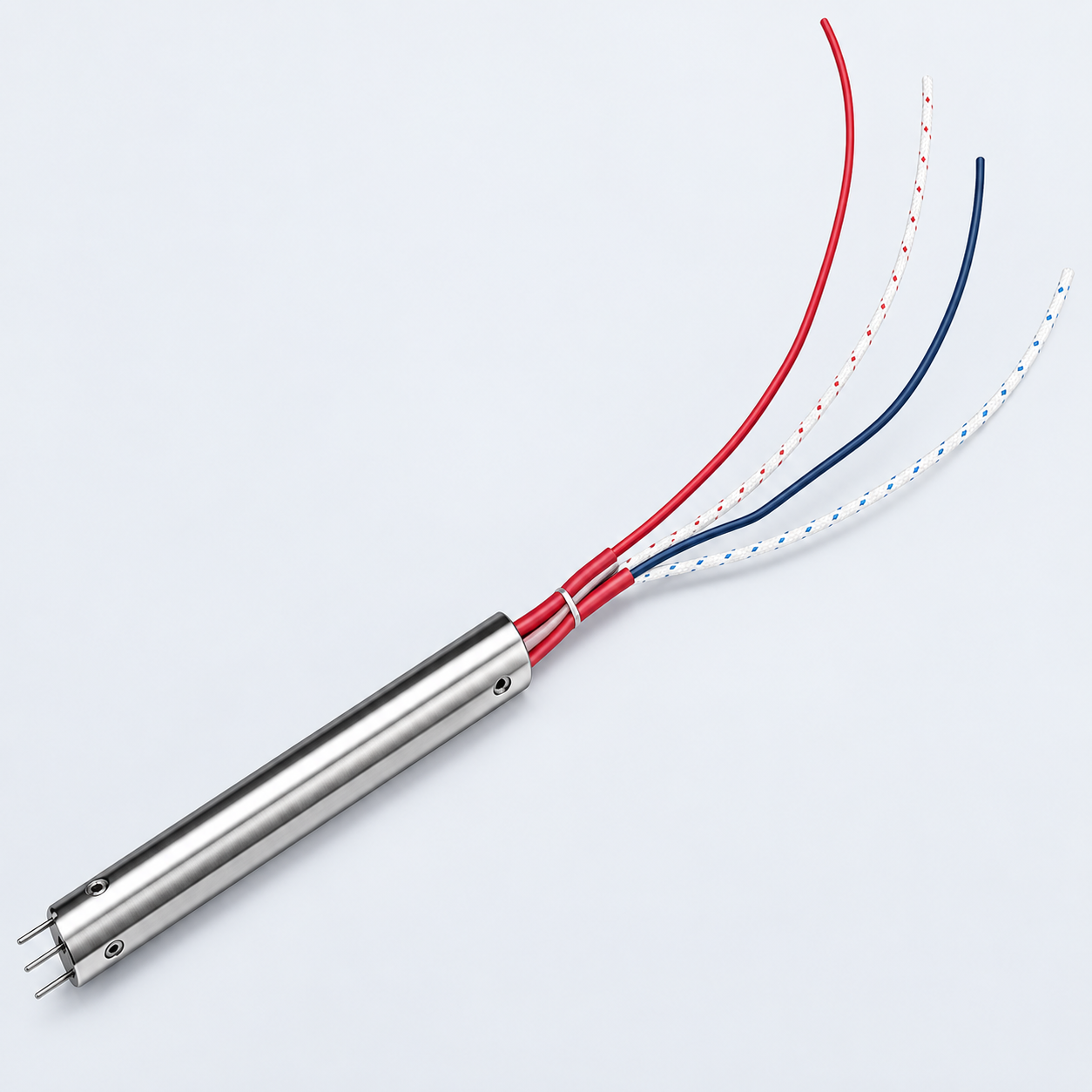
Type J, ungrounded
Iron constantan, isolated from the sheath.
- TCK
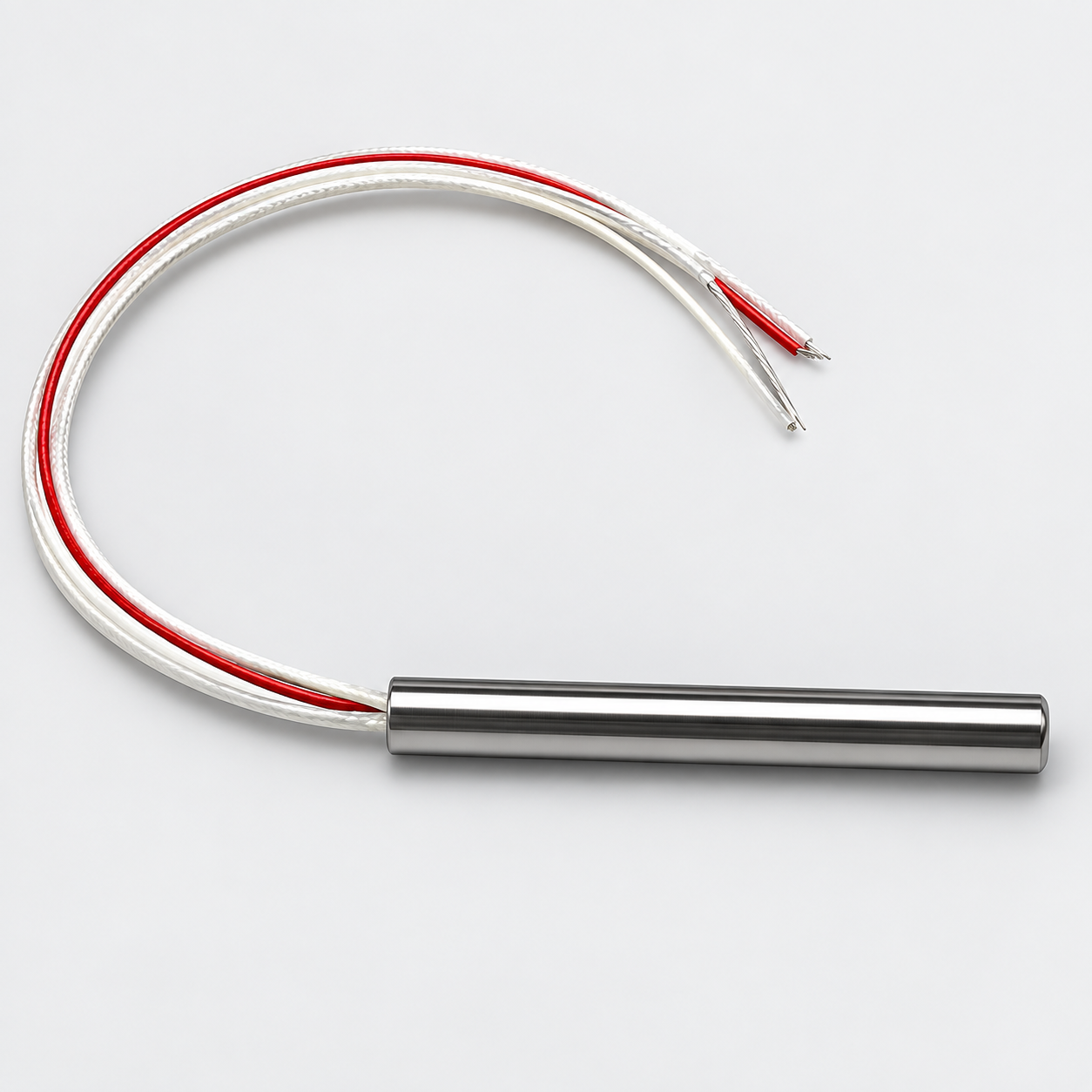
Type K, ungrounded
Higher range than Type J.
- TCG
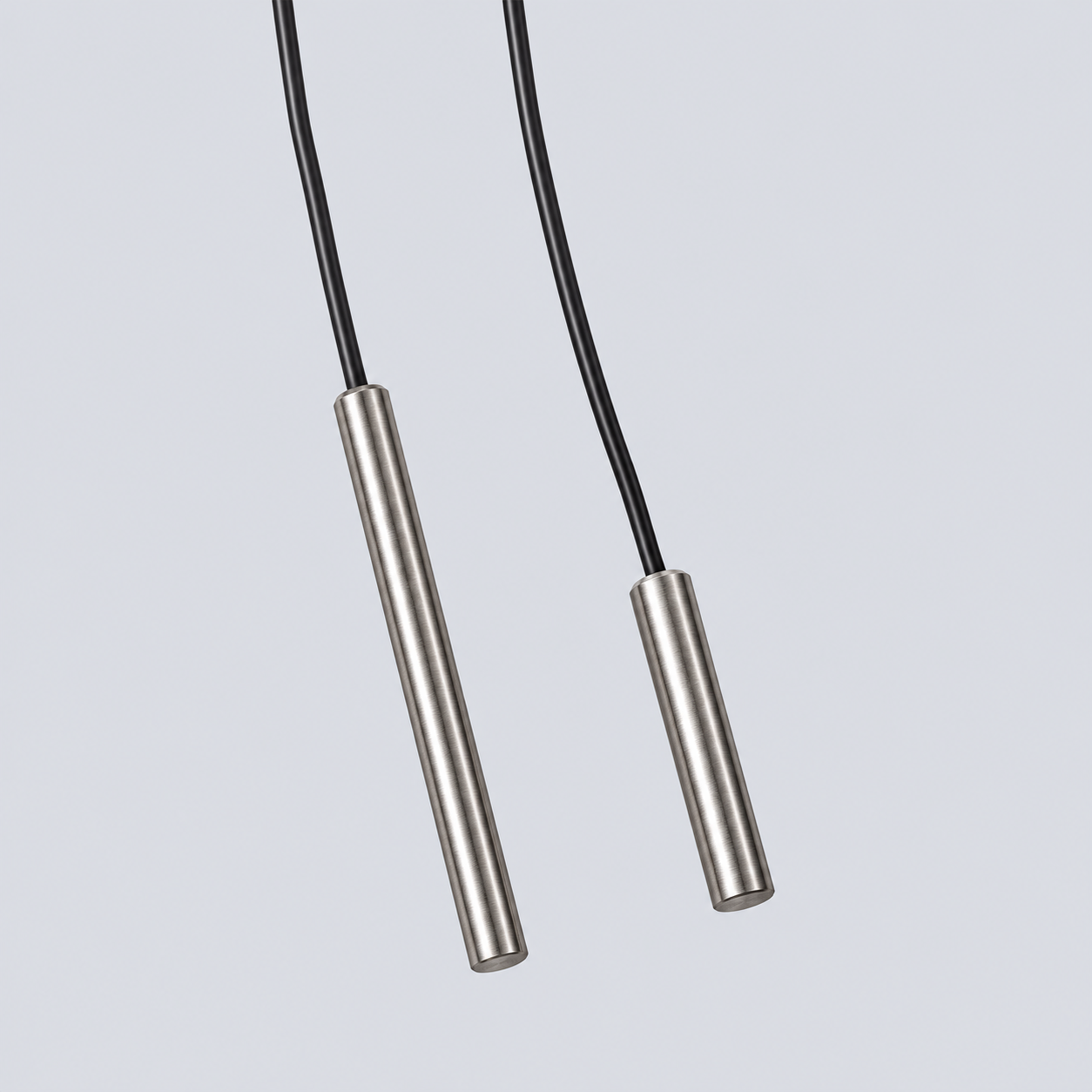
Grounded junction
Faster response, junction bonded to the sheath.
04 Mounting and fittings
- M0
None
Plain sheath, no fitting.
- M1
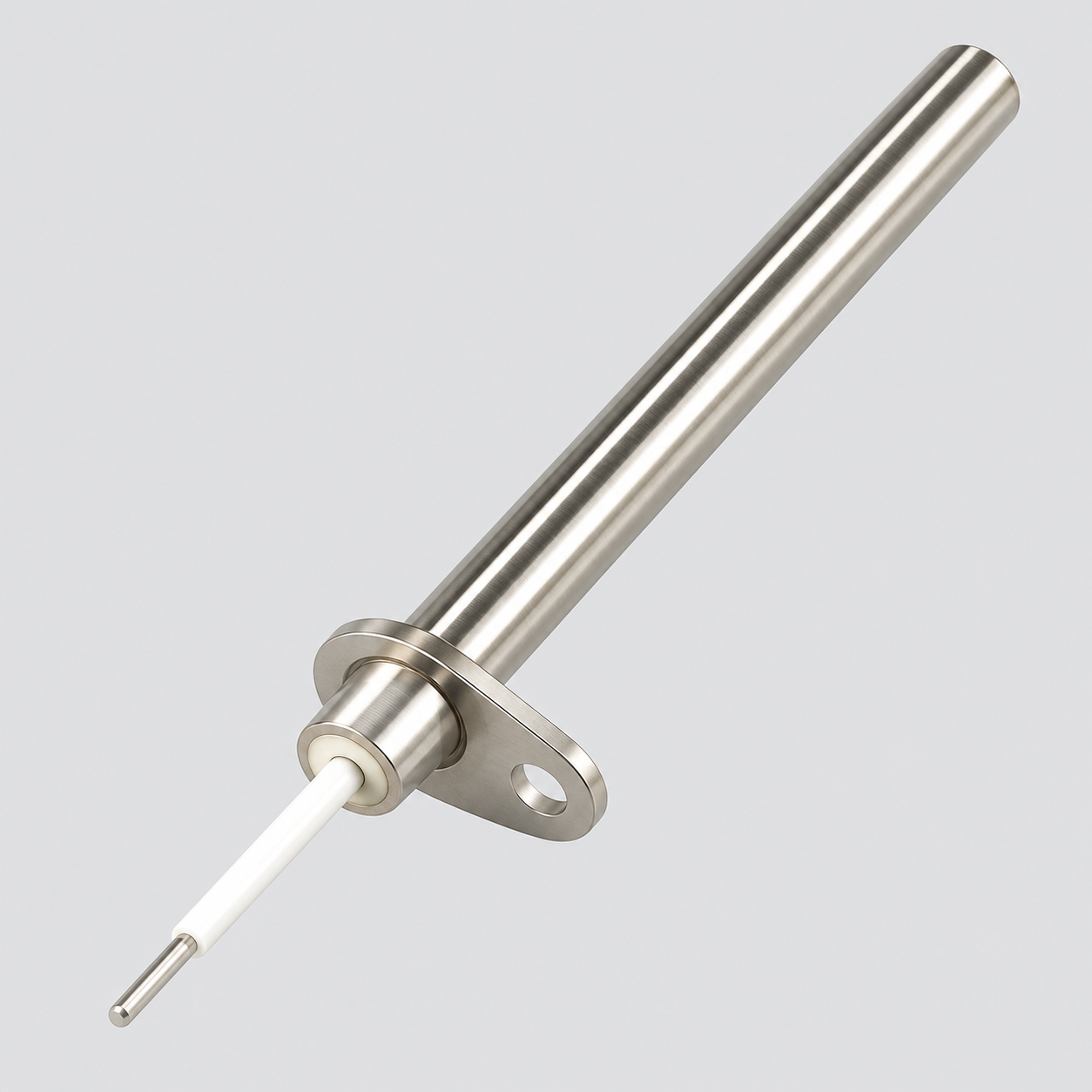
Round flange
Welded, for surface mounting to a plate.
- M2
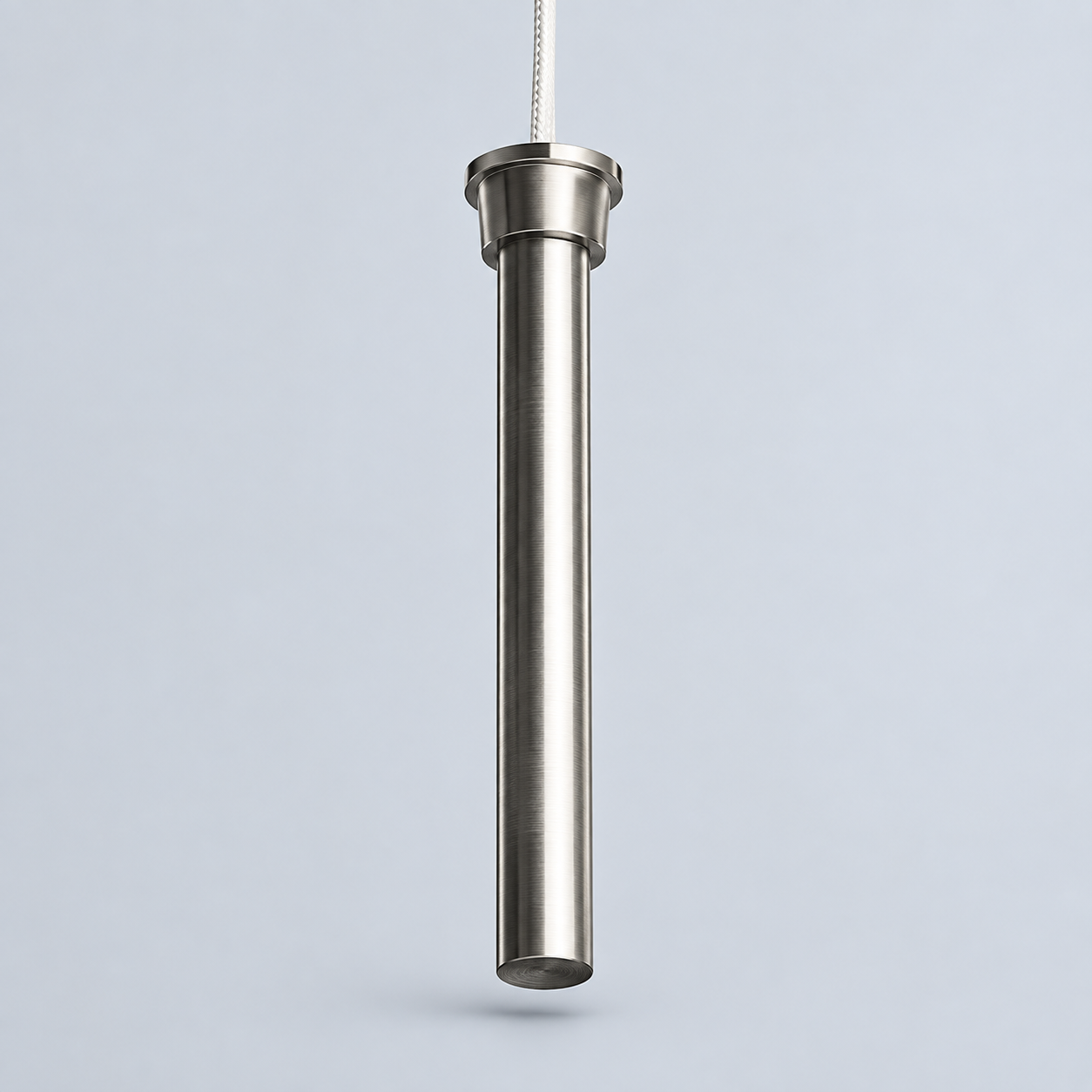
Threaded fitting
NPT or BSP, size to be specified.
- M3
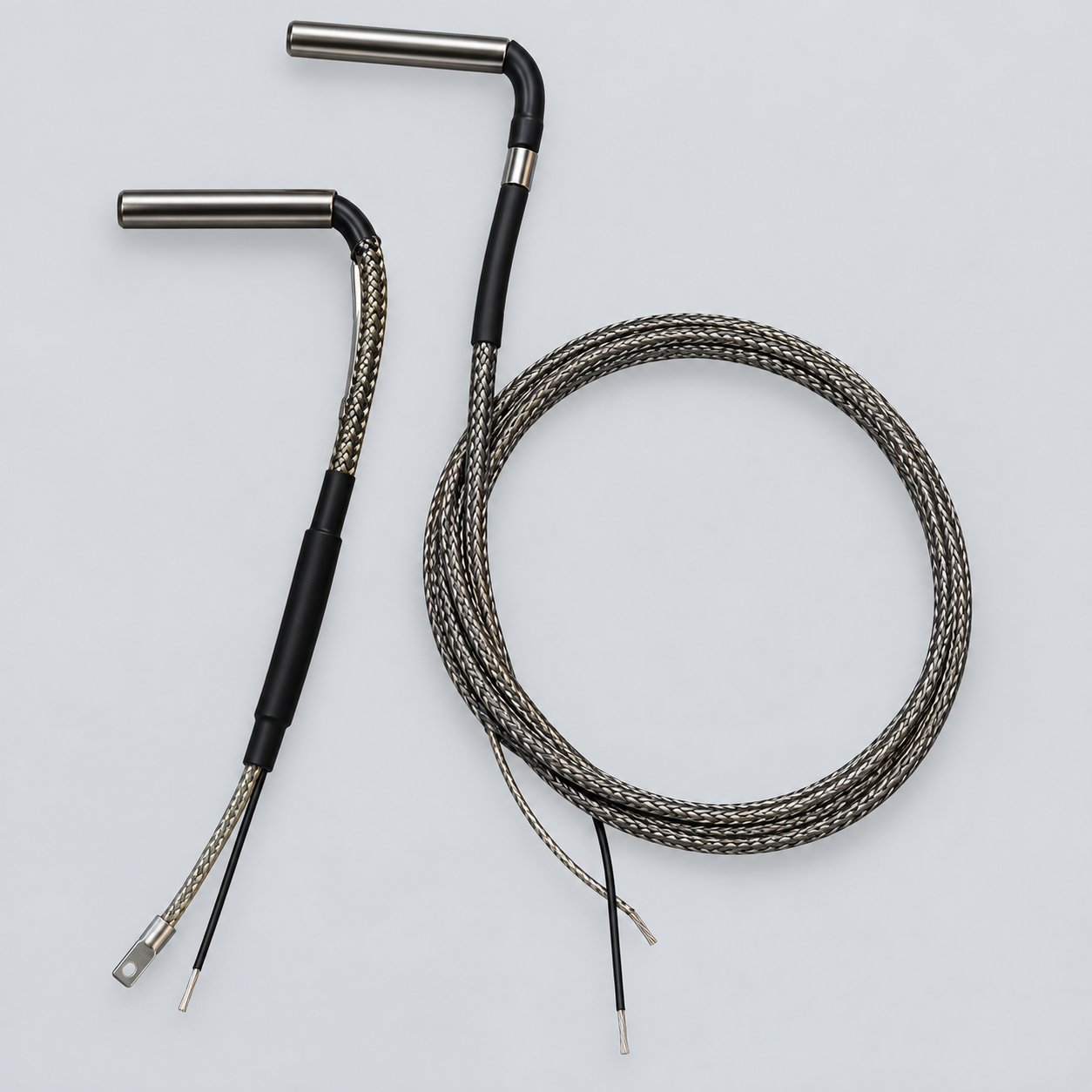
T strain clamp
Strain relief where the lead is pulled in service.
Thermocouple junction position is specified separately: disc end, mid length or lead end. Continuous lead temperature limits, as published by Swiftheat: Teflon 270 C, fibreglass 450 C, ceramic 900 to 1000 C.
Choosing the right heater
Watt density
Watt density is the load on the sheath surface. Too high and the element burns out early, too low and the tool will not reach temperature. It is chosen from the working temperature and how well the heat leaves the heater, which in practice means how tightly it fits the bore.
Fit is what actually kills cartridge heaters
An air gap between the heater and the bore is an insulator. The heater keeps making heat that cannot escape, so the coil temperature climbs until the element fails, while the tool never gets hot enough. Nine failures in ten start here.
Work the clearance out before ordering
Fit equals the largest hole diameter minus the smallest heater diameter. Tell us the bore diameter and tolerance in your own part on the enquiry form and we will size the heater to suit it, rather than sending a standard part and hoping.
Why these fail early
Telling a buyer how a product fails is the most credible thing a manufacturer can publish, and it is the fastest way to stop the same failure arriving twice.
- Loose fitThe commonest cause by a wide margin. Heat cannot leave the sheath, so the coil cooks.
- Watt density too highSpecified for speed rather than for the duty the tool actually runs.
- Moisture in the MgOInsulation resistance falls after a shutdown. Often recoverable by baking out.
- Lead damage at the exitMovement and abrasion at the tool face. Solved with the right lead protection.
- ContaminationPlastic or oil ingress into the bore, changing the heat path.
- Cycling stressRapid on and off duty on a heater specified for continuous running.
Where these are used
Each one links to the industry page, which shows the heating zones on the machine and the element type for each zone.
- Injection MouldingEvery zone on the machine, from the dryer to the mould, with the element type that suits it.
- Blow MouldingPreform reheat, extrusion head and neck tooling heating for PET and extrusion blow lines.
- Packaging MachinerySealing bars, cutting and creasing tools, shrink tunnels and hot melt tanks.
- Die and MouldHot stamping dies, press platens and mould preheat, where the heater lives inside the tool.
- Food ProcessingTanks, sealing tools, dryers and jacketed lines, in plant that gets washed down.
- Pharmaceutical MachineryBlister and tube sealing, granulation drying, jacketed vessels and validated temperature measurement.
- Rubber and ElastomersCuring and vulcanising platens, extruder barrels and mould heating.
- Other Industrial HeatingOvens, tanks, ducts, pipes and surfaces, in plant that does not fit any of the categories above.
Related products
-
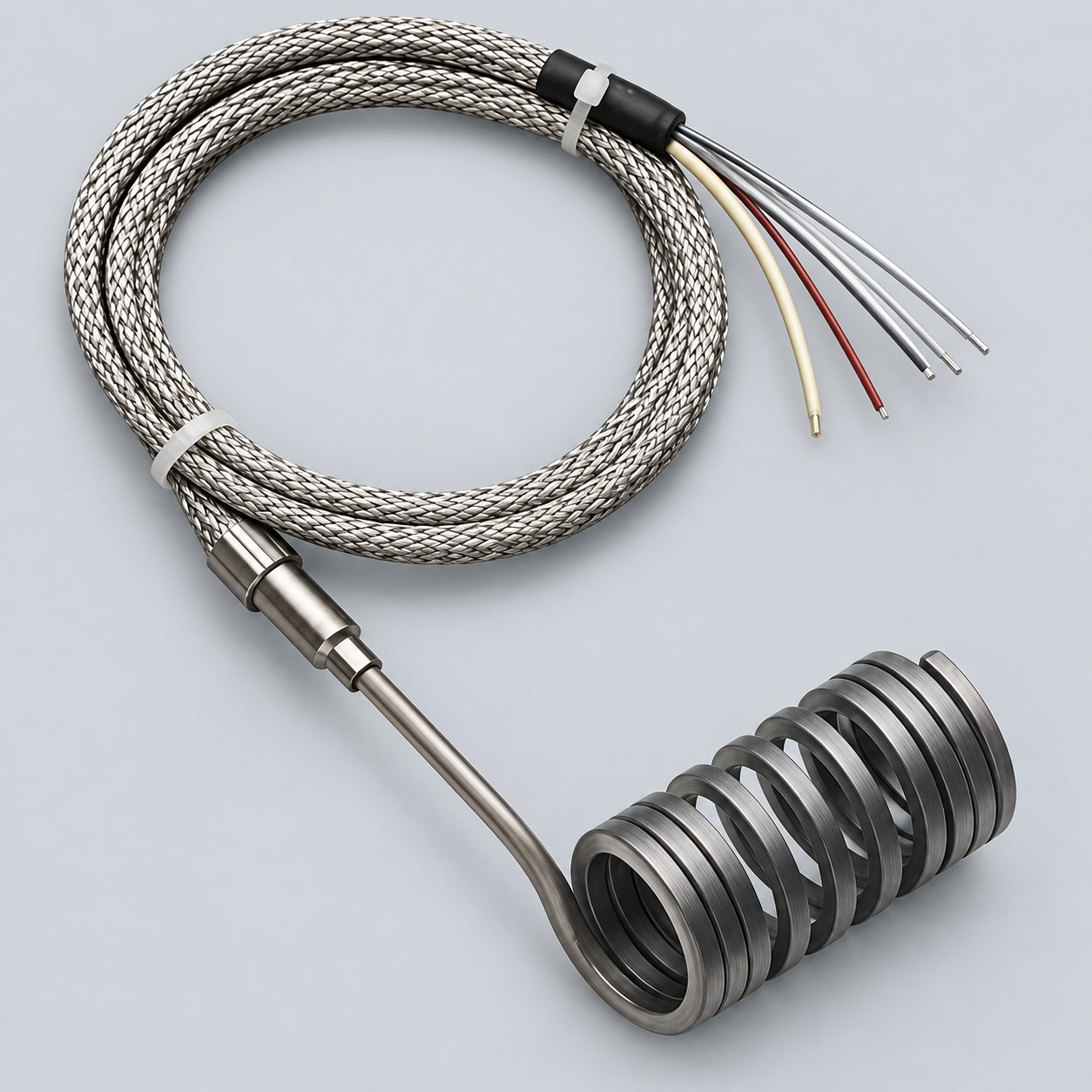 Coil Heaters
Hot runner nozzles and manifolds. Wound to the diameter, profiled along the length.
Coil Heaters
Hot runner nozzles and manifolds. Wound to the diameter, profiled along the length.
-
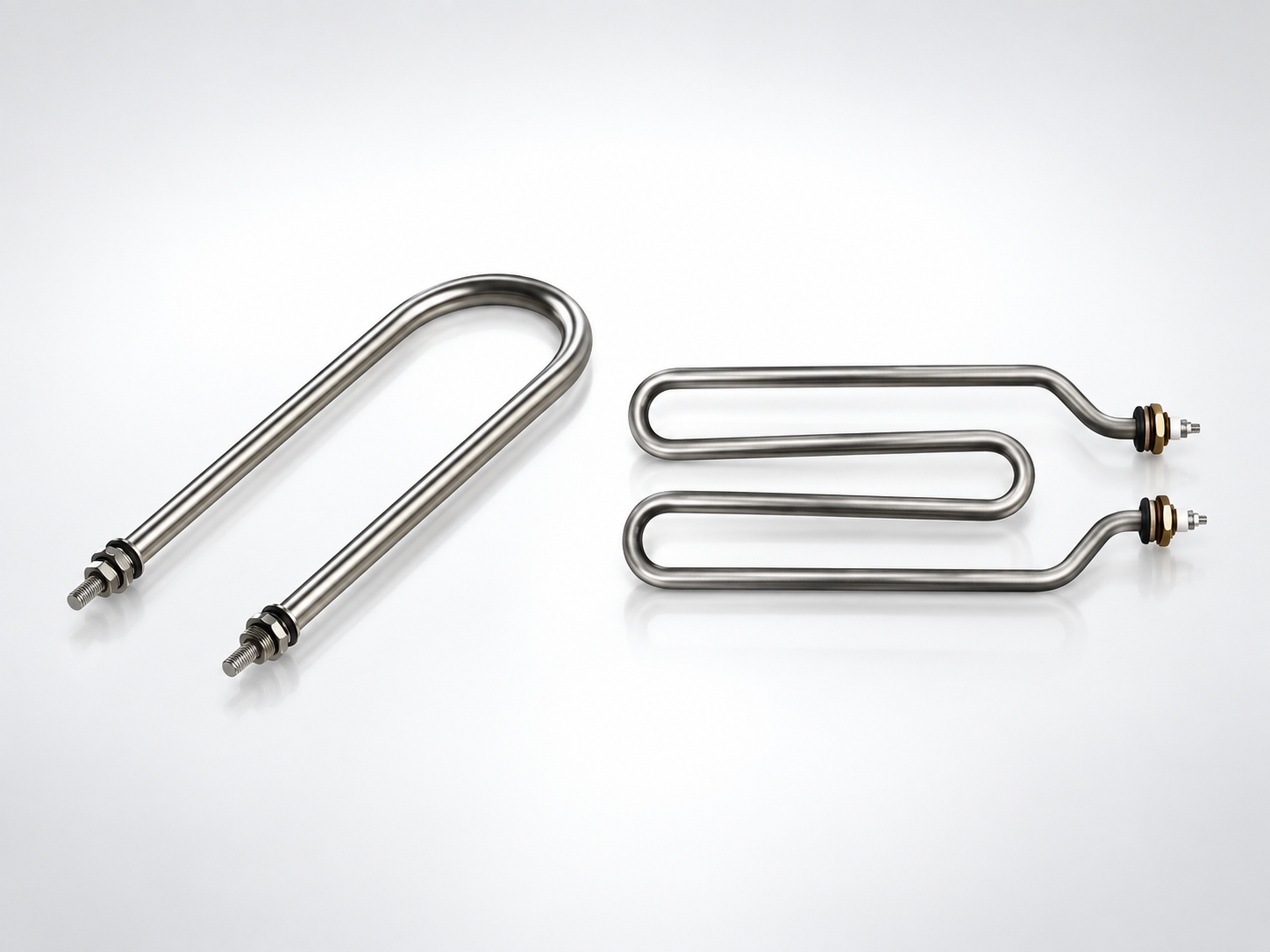 Tubular Heaters
Air, liquids and surfaces. Straight, U form, W form or coiled to your drawing.
Tubular Heaters
Air, liquids and surfaces. Straight, U form, W form or coiled to your drawing.
-
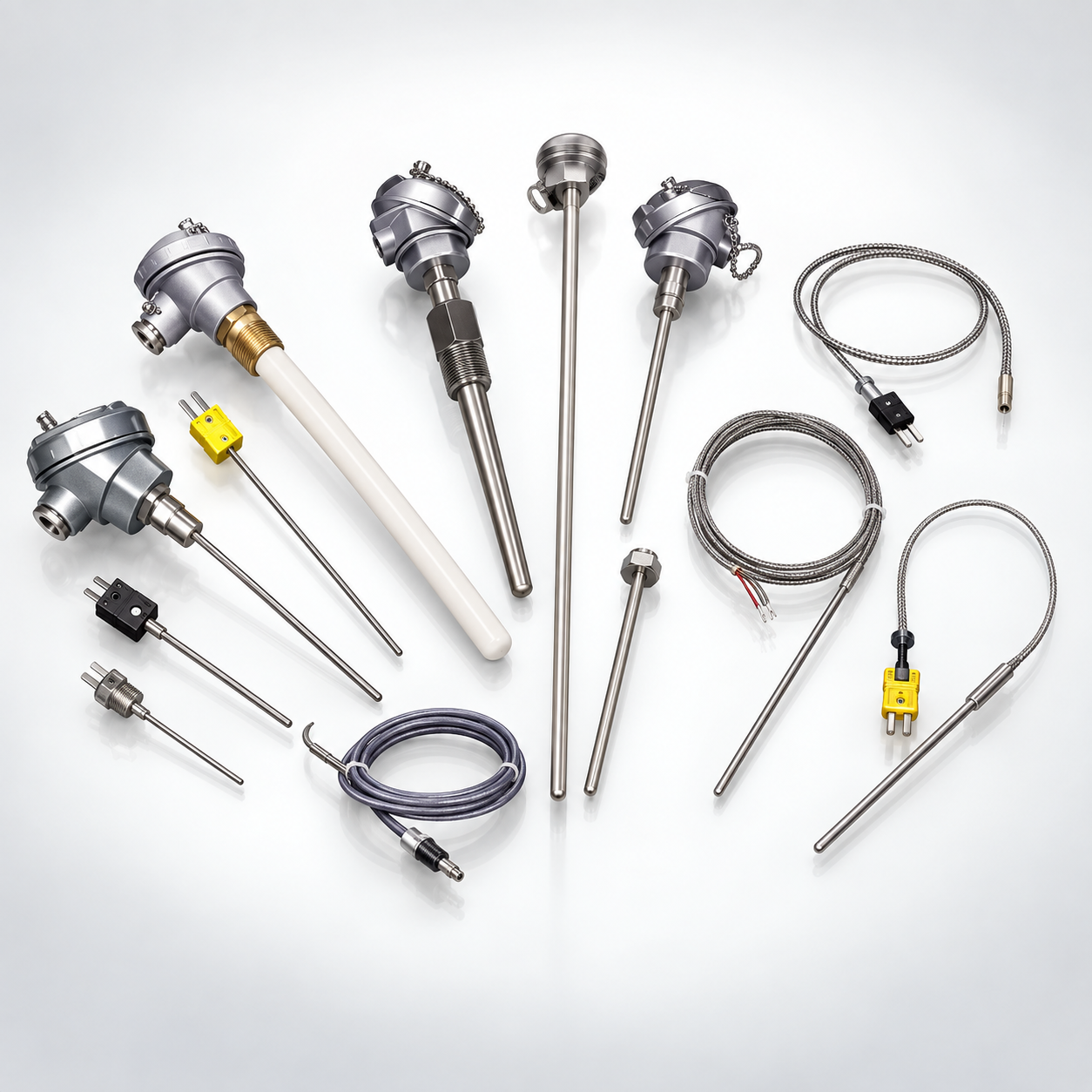 Thermocouples and Temperature Sensors
Types J, K, N, T, E, R, S, B and C, plus PT100, PT500 and PT1000 RTDs, made to length.
Thermocouples and Temperature Sensors
Types J, K, N, T, E, R, S, B and C, plus PT100, PT500 and PT1000 RTDs, made to length.
Request a quote for cartridge heaters
Fill in what you know and leave the rest. The whole specification arrives at the works as a single readable email, and anything you leave blank our engineers will propose.