 Thermal Technologies
Industry
Food Processing
Tanks, sealing tools, dryers and jacketed lines, in plant that gets washed down.
Everything here is either immersed, sealed against water, or both.
The process, and where the heat goes in
Read left to right. Each block is a place on the machine that has to be held at a temperature, coloured by how hot it runs.
Scroll the diagram sideways to see every zone.
- Coolest
- Warm
- Hot
- Hottest
Zone by zone
This table is the whole argument for the page. It maps the machine you already have to the element type that suits each position on it, and every product name links to the family page with the sizes, the options and the codes.
| Zone | Duty | Typical temperature | Swiftheat product | Why this element |
|---|---|---|---|---|
| Process tanks and vats | Immersed, continuous | 60 to 120 °C | Tubular Heaters | Immersion elements with the sheath chosen for the medium |
| Hot air drying and baking | Air heating, high flow | 80 to 250 °C | Tubular Heaters | Finned elements into moving air |
| Sealing and forming tools | Cyclic, fast response | 120 to 220 °C | Cartridge Heaters | Bore mounted in the tool, washdown rated lead protection |
| Long sealing bars | Flat surface | 120 to 200 °C | Strip Heaters | Clamped to the bar, sealed terminal box |
| Surface and radiant heating | Radiant | 100 to 250 °C | Ceramic Infrared Heaters | Heats the product surface without heating the whole enclosure |
| Control loop | Measurement | - | Thermocouples and Temperature Sensors | Stainless sheaths and sealed heads |
Temperatures are typical for the process and are given as a starting point. Send us the zone temperatures your machine actually runs at and we will work back to a safe loading.
Products for food processing
A shortlist, not the whole catalogue.
-
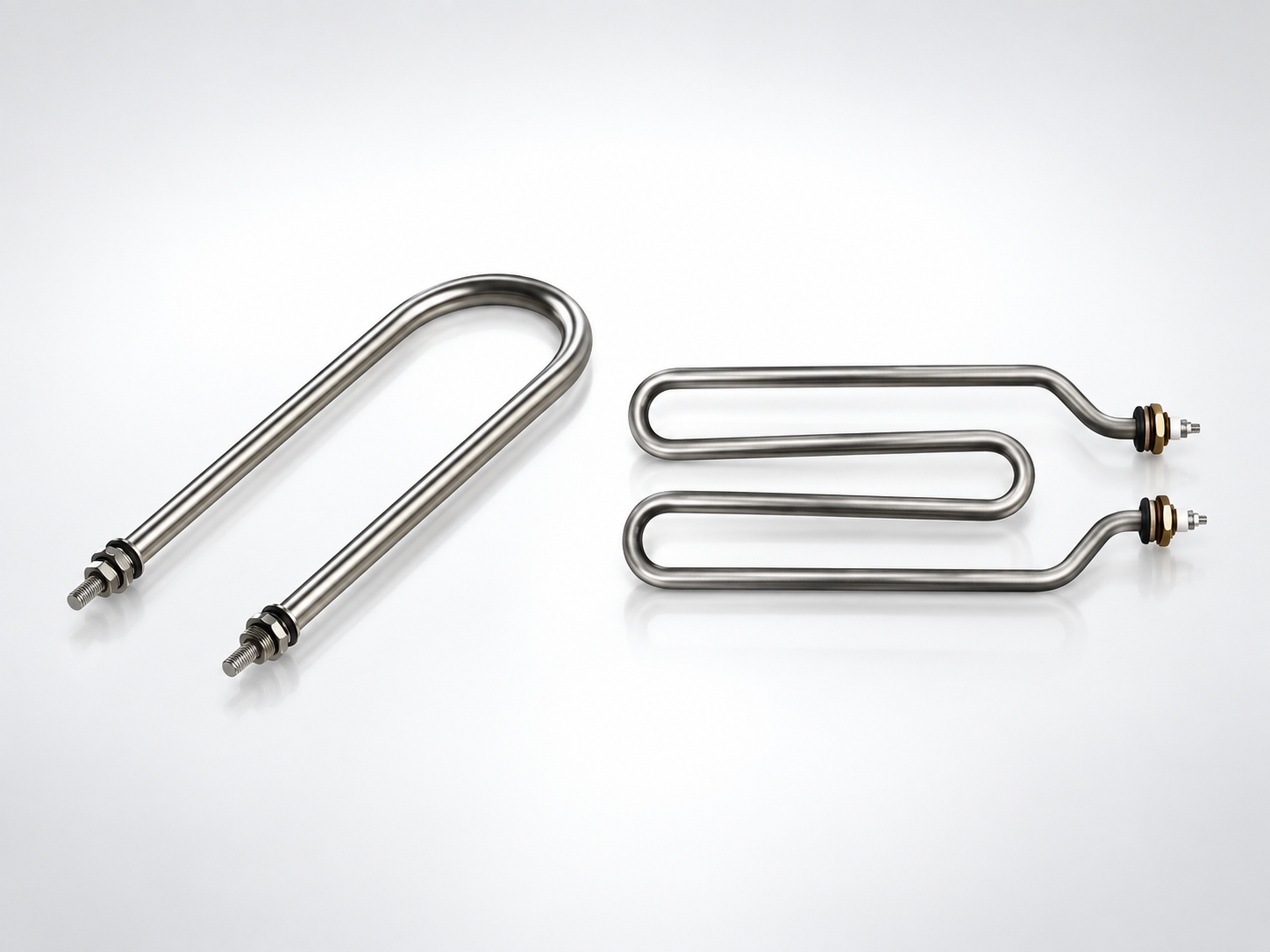 Tubular Heaters
Air, liquids and surfaces. Straight, U form, W form or coiled to your drawing.
Tubular Heaters
Air, liquids and surfaces. Straight, U form, W form or coiled to your drawing.
-
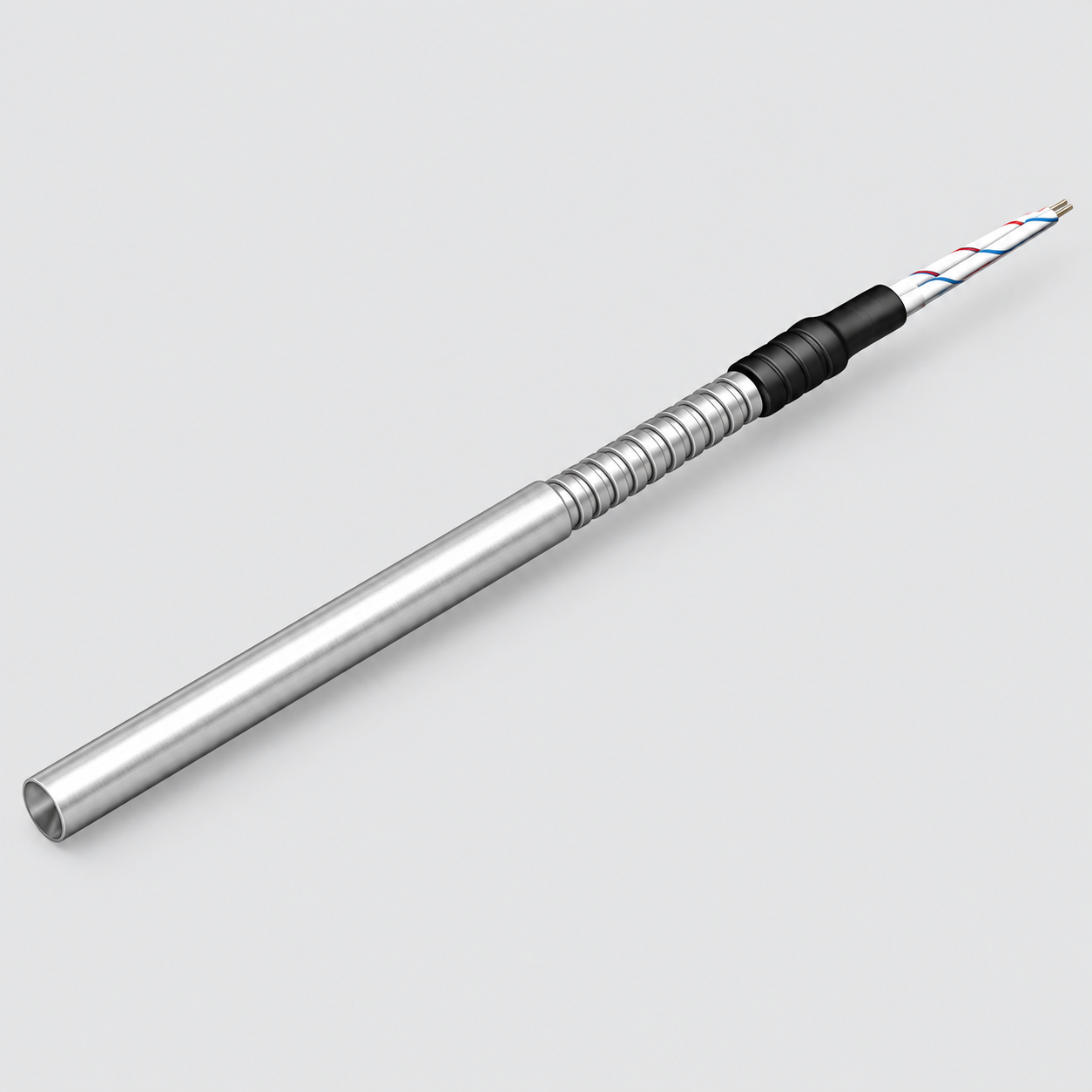 Cartridge Heaters
Bore mounted in moulds, platens and dies. Round, swaged, made to your length.
Cartridge Heaters
Bore mounted in moulds, platens and dies. Round, swaged, made to your length.
-
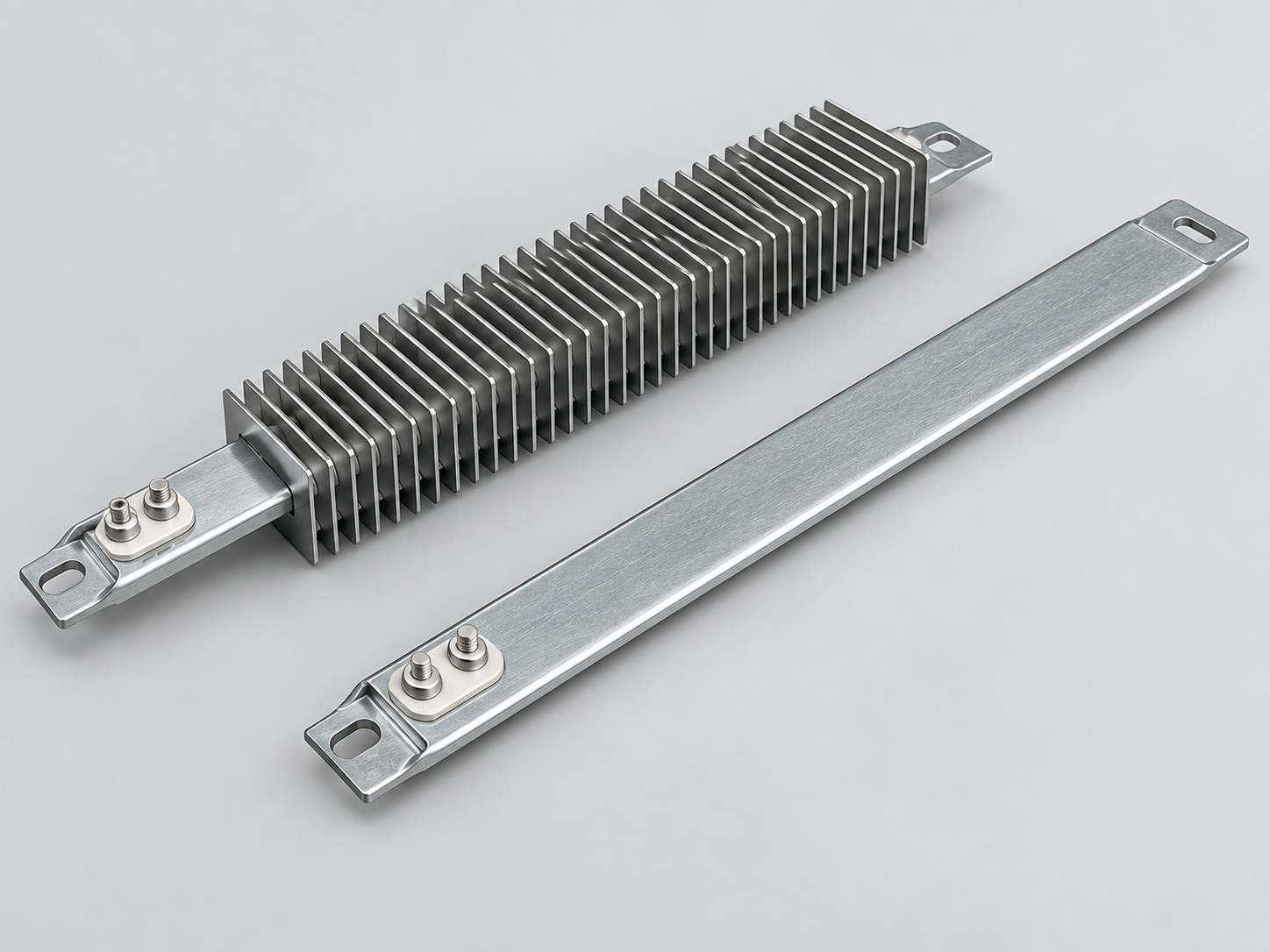 Strip Heaters
Flat and gently curved surfaces, sealing bars, platens and duct air.
Strip Heaters
Flat and gently curved surfaces, sealing bars, platens and duct air.
-
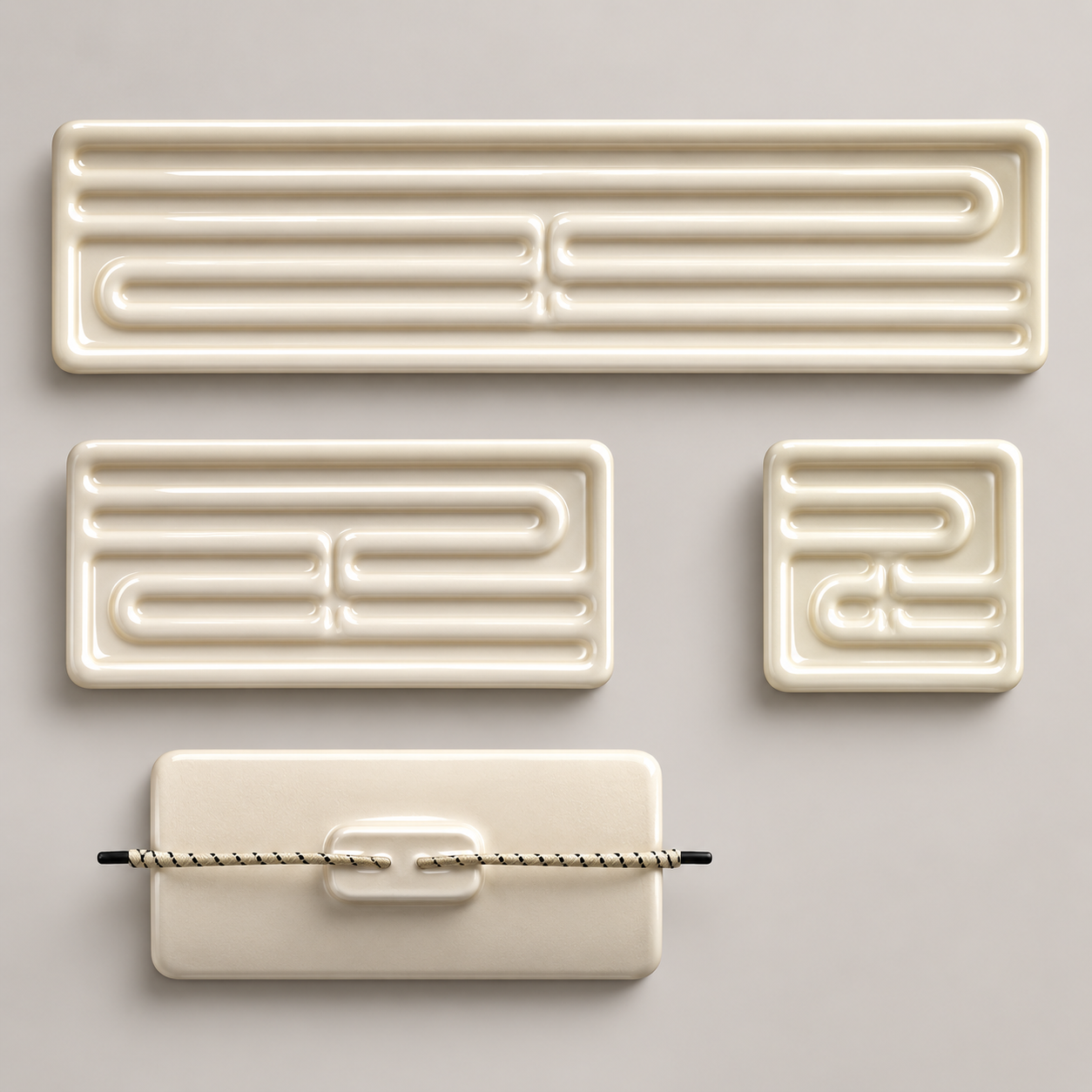 Ceramic Infrared Heaters
Radiant surface heating, thermoforming, drying and preheating.
Ceramic Infrared Heaters
Radiant surface heating, thermoforming, drying and preheating.
-
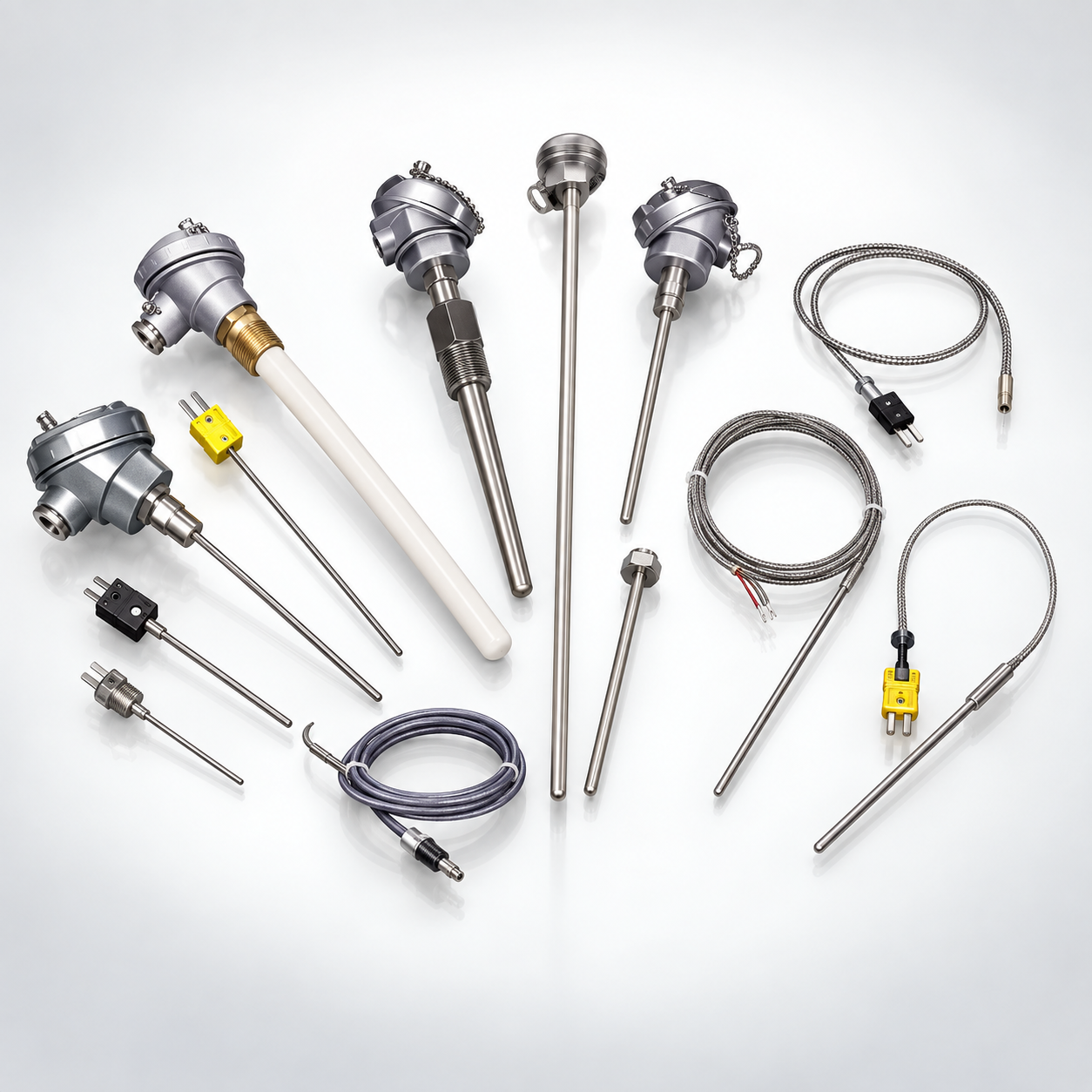 Thermocouples and Temperature Sensors
Types J, K, N, T, E, R, S, B and C, plus PT100, PT500 and PT1000 RTDs, made to length.
Thermocouples and Temperature Sensors
Types J, K, N, T, E, R, S, B and C, plus PT100, PT500 and PT1000 RTDs, made to length.
Application notes
Washdown decides the termination, not the element
Most heater failures in a food plant are water finding a terminal, not the element wearing out. A sealed terminal box, a proper gland and a lead protection rated for the wash cycle are worth more than a higher grade sheath.
Sheath material follows the medium
Water, brine, syrup, oil and cleaning chemicals all attack differently. Chloride in particular pits stainless. Tell us what the element sits in, including what is used to clean it.
Dry running protection on every tank
An immersion element switched on in an empty tank fails within seconds. Low level protection is part of the installation, not an optional extra.
What to send us
An enquiry with these in it can be quoted the same day. An enquiry without them takes three phone calls first.
- What is being heated, and what the vessel is made of
- Whether the plant is washed down, and with what
- Operating temperature and whether the duty is continuous
- Tank dimensions and the mounting available: flange, boss or over the side
- Any food contact requirement that affects material choice
- Existing element dimensions if this is a replacement
A photograph of the old element next to a tape measure is worth more than a paragraph of description, and a drawing is worth more than both.
Build the list instead
If you are replacing several elements at once, the list builder walks through each one, draws it as you specify it, and produces a single printable document you can send by email or on WhatsApp.
Request a quote for food processing
Tell us the machine and the zone. If you are not sure which element type suits it, leave the product blank and our engineers will propose one.